Friday, February 1, 2019

The Jewish Ghettos Of The Holocaust - Disturbing Photos Captured Inside

Before the concentration camps, the Nazis' victims endured another kind of hell inside the walls of the Jewish ghettos.

“There is no justice in the world,” one young girl wrote in her diary, struggling through starvation and imprisonment under Nazi rule, “not to mention in the ghetto.”

Life in the Jewish ghettos of the Holocaust was indeed torture. After their invasion of Poland in 1939, the Nazis began setting up Jewish ghettos both in that country and across Europe. Jewish civilians were branded and forcibly deported into small, cramped quarters, often segregated from the rest of the city with walls or barbed wire. There they waited, hoped, and prayed, most unaware that this was nothing more than the first step in the Nazi plot for the systematic eradication of Europe's Jewish population.

Before they could even be sent to concentration camps, however, many prisoners of the Jewish ghettos were starved out. They were given little to nothing to eat, leaving them to suffer through painful fits of hunger. Some died of starvation, and many more from the diseases that were allowed to spread wildly inside of the ghetto walls.

And there was little anyone could do to stop it. The people on the other side of the walls were strictly forbidden from smuggling food into the Jewish ghettos — on penalty of death.

Still, most ghetto dwellers just did their best to survive. They had little idea what horrors the Nazis were preparing them for, and many could only resolve themselves to struggle through the hard times and pray the Nazis would lose the war and someone would come and liberate them.

That freedom, though, came too late. By 1942, the Nazis had begun the next phase of their plan: systemically exterminating every person inside those ghetto walls. Some ghettos, especially in the USSR, were simply turned into "extermination ghettos," where the people would be dragged out into the wounds and shot. In other ghettos, the people would be sent off to death camps like Auschwitz to be gassed and incinerated.

When the people in the Jewish ghettos began to realize that death was imminent, some started fighting back. There were uprisings in ghettos across the continent, with Jewish resistance fighters grabbing anything they could find and desperately trying to fend off the Nazis that had stolen their homes. The most famous revolt was the Warsaw ghetto uprising, where Jews and Poles worked together to try to stop the SS from dragging their families off to the death camps.

As hard as they fought, though, a few resistance fighters couldn’t hold off the Nazi war machine forever. The SS simply struck back harder. Much of the Warsaw ghetto was burned to the ground, the people were dragged out of hiding, and the men and women were rounded up and sent to Treblinka, one of The Holocaust’s most brutal death camps.

In time, however, liberation finally came. In late 1944 into 1945, the Allied armies marched through Europe, fighting off the Nazi forces and freeing the people who had suffered through it all. For millions, though, help came too late.

Millions of prisoners of the Jewish ghettos died at the hands of the Nazis — but the photos survive; a warning, showing us what life looks like at the start of a genocide.
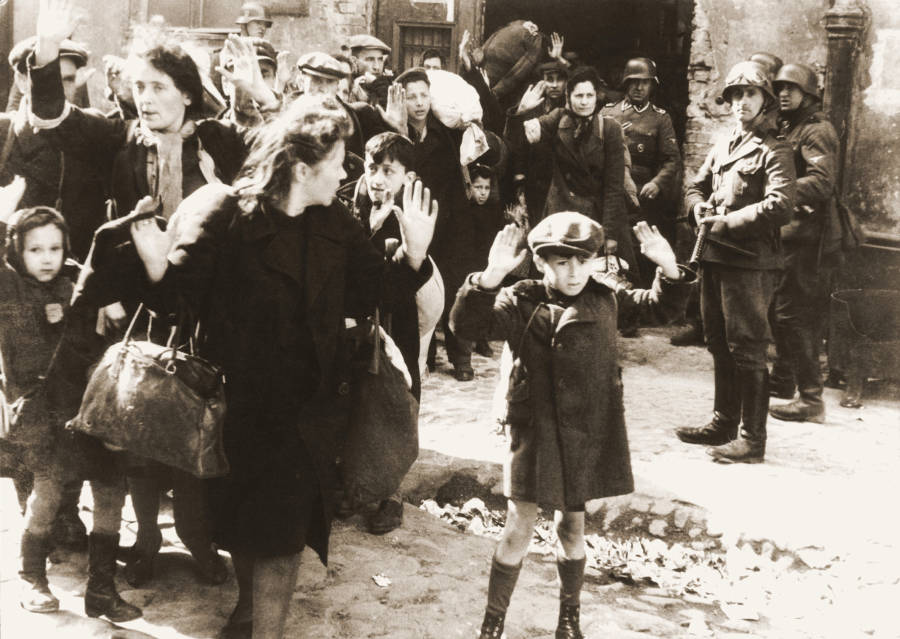


Polish Jews are forced out of hiding by the Nazis during the Warsaw ghetto uprising.
Warsaw, Poland. May 1943.
Wikimedia Commons
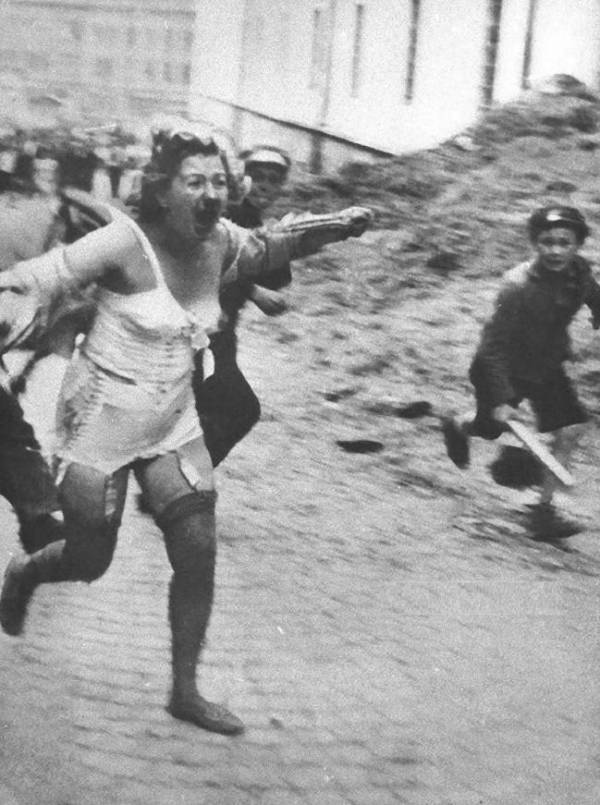


Very young Ukrainian nationalists, in cooperation with the Nazi SS and armed with clubs, chase a Jewish woman through the streets of the Lviv ghetto, where at least 6,000 Jews were killed by militias and Nazi forces.
Lviv, Poland. 1941.
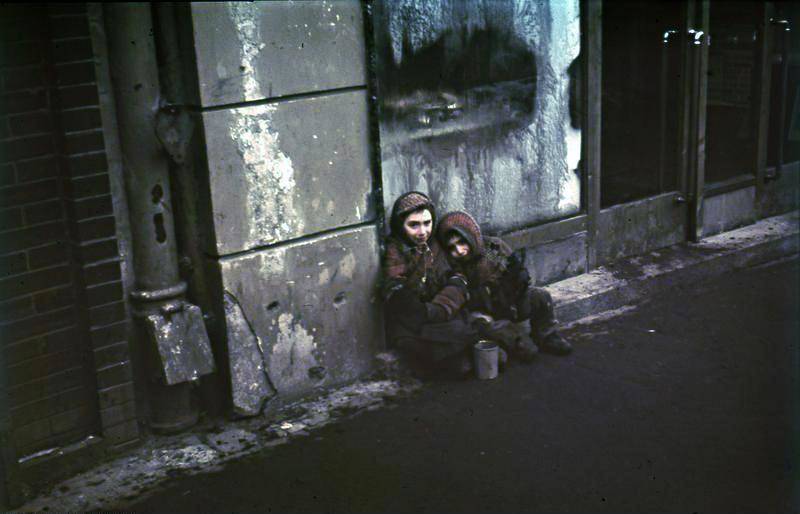


Starving children huddle for warmth inside the Warsaw ghetto.
Warsaw, Poland. Circa 1940-1943.
Wikimedia Commons
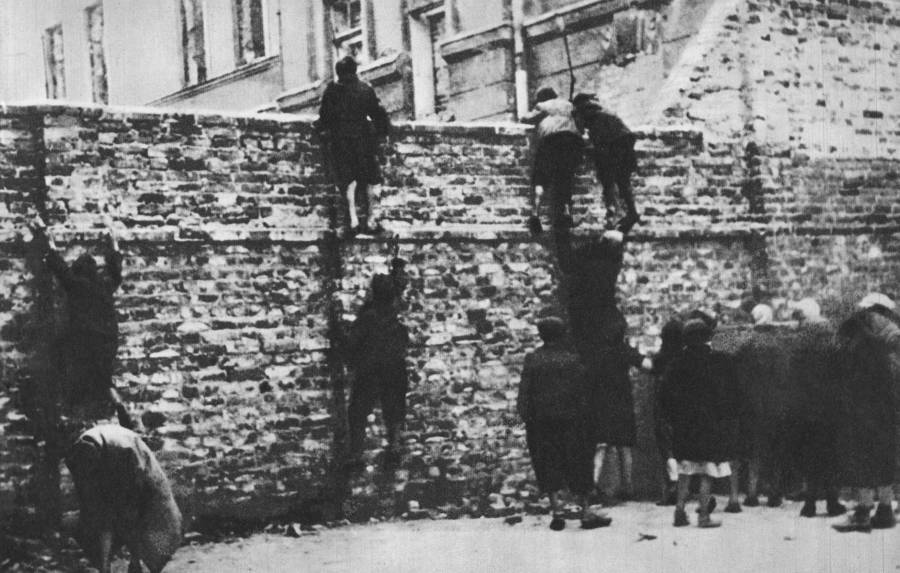

Jewish children climb up to sneak a peek of what's happening on the other side of the ghetto wall. 
Warsaw, Poland. Circa 1941.
Wikimedia Commons
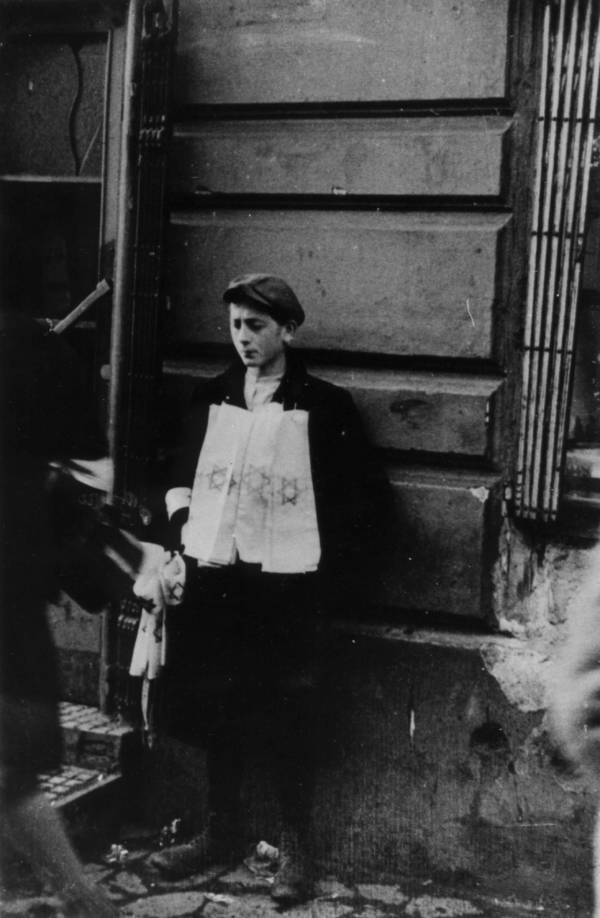


A boy holds up a sign labelling him as a Jew.
Warsaw, Poland. Circa 1940-1941.
Wikimedia Commons
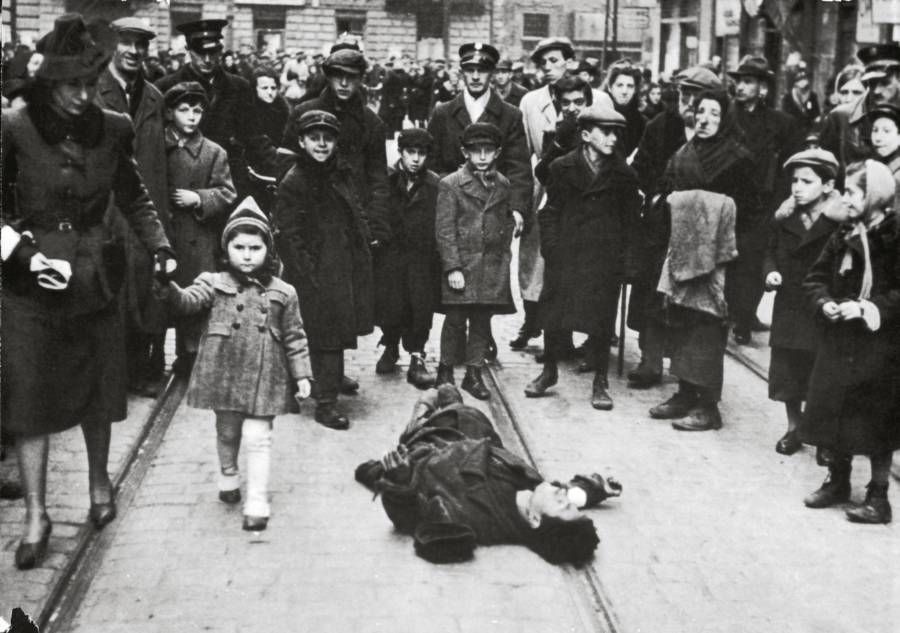


A dead man lies in the street, surrounded by a crowd of people, in the Warsaw ghetto.Warsaw, Poland. Circa 1940.
Imagno/Getty Images
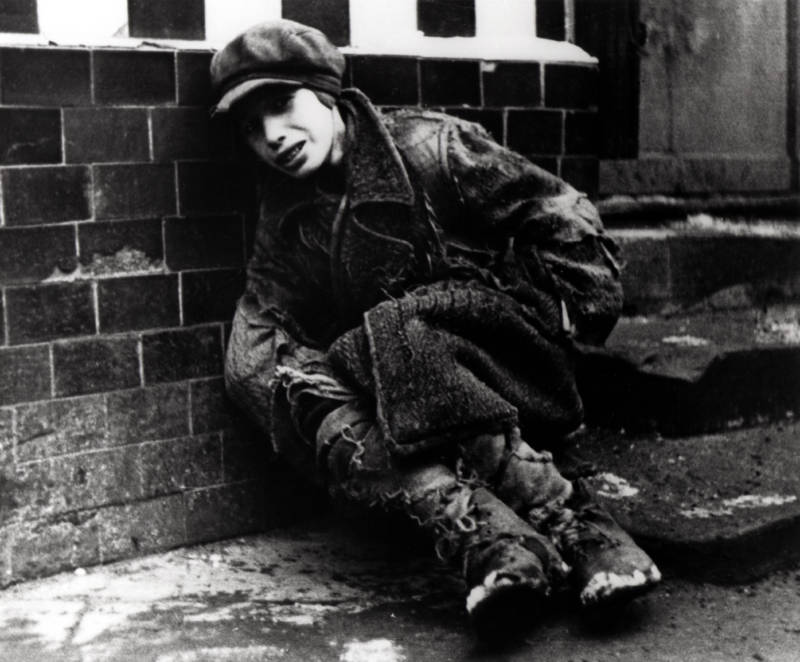


A boy sits in the street in the Warsaw ghetto.
Warsaw, Poland. February 1941.
Joe J. Heydecker/Galerie Bilderwelt/Getty Images
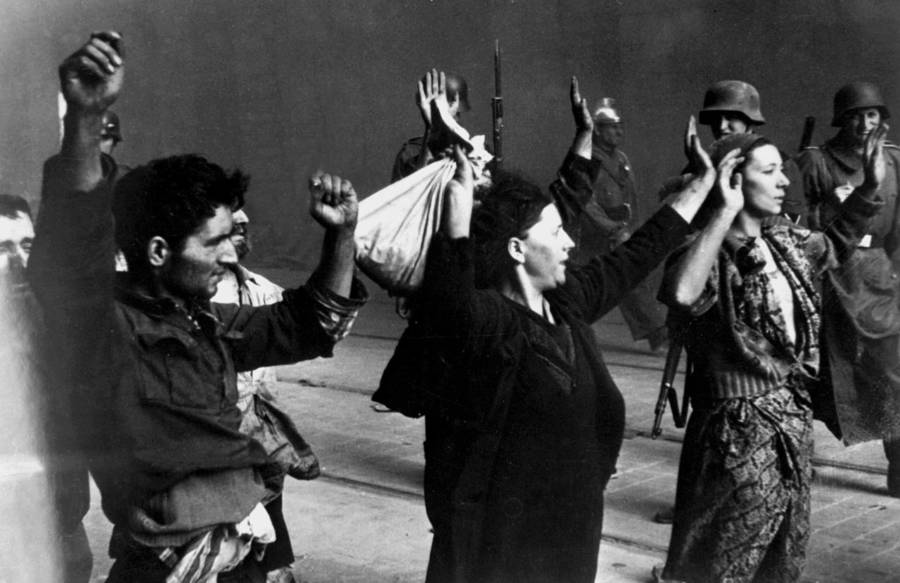

Jewish Resistance fighters, trying to keep their families from being deported to the death camps, are caught by the SS. In the original caption, the SS labelled them "bandits" for trying to avoid the death camps.
Warsaw, Poland. April or May 1943.
Wikimedia Commons
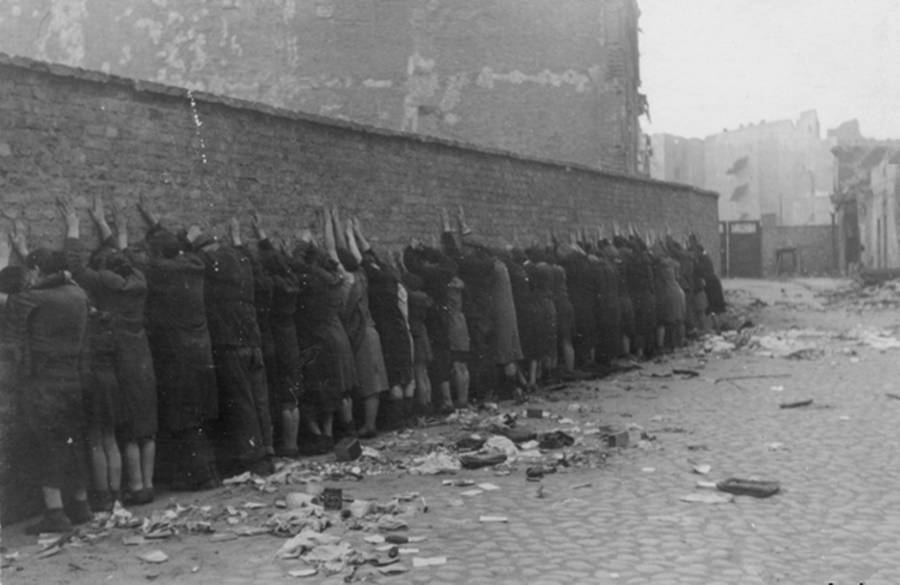


Jews are lined up against the ghetto wall to be searched. Warsaw, Poland. April or May 1943.
Wikimedia Commons
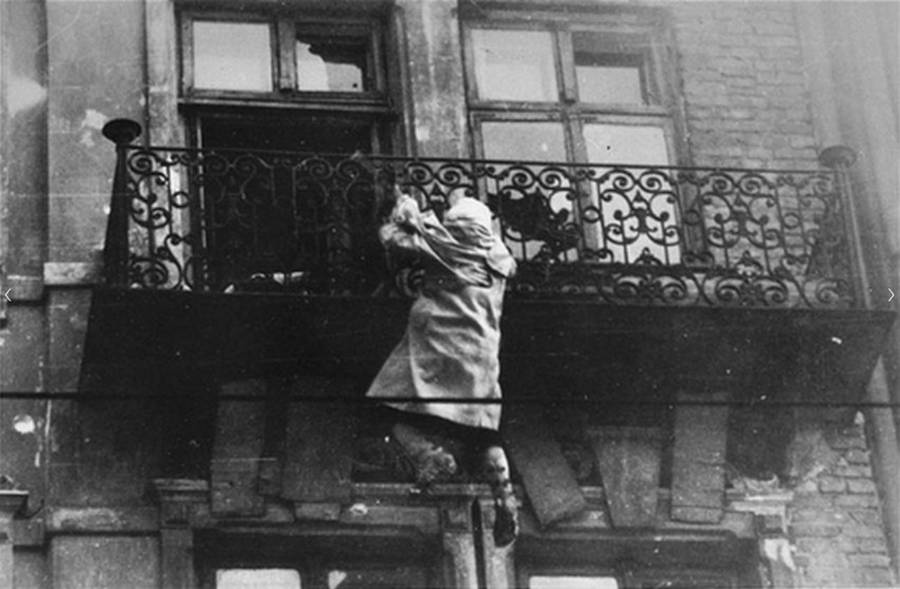

A woman dangles from a balcony of a burning building during the Warsaw ghetto uprising, desperately trying to escape with her life.
Warsaw, Poland. April or May 1943.
Wikimedia Commons
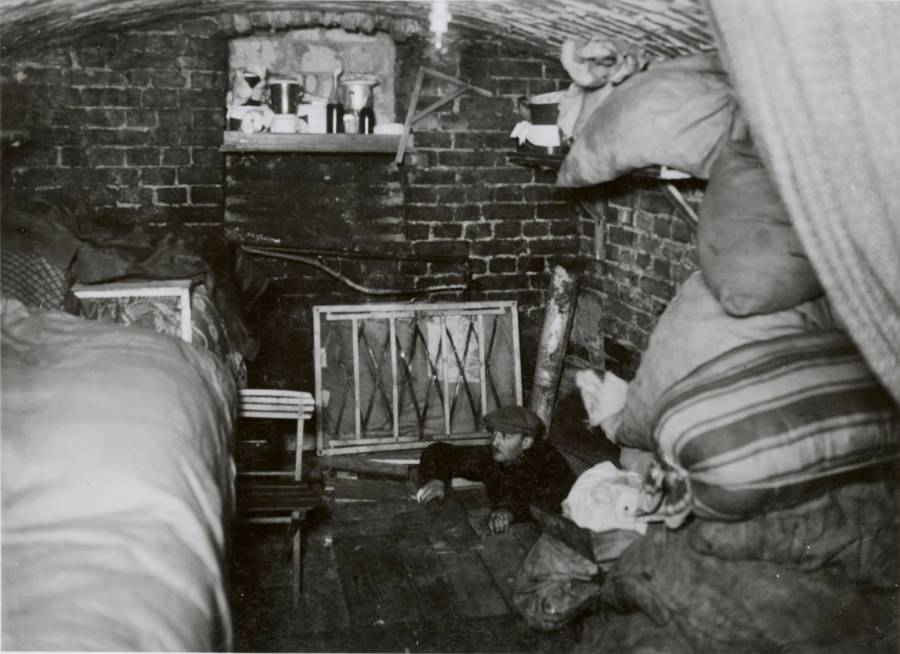


A Jewish man crawls out of his hiding place in the floor. Warsaw, Poland. April or May 1943.
Wikimedia Commons
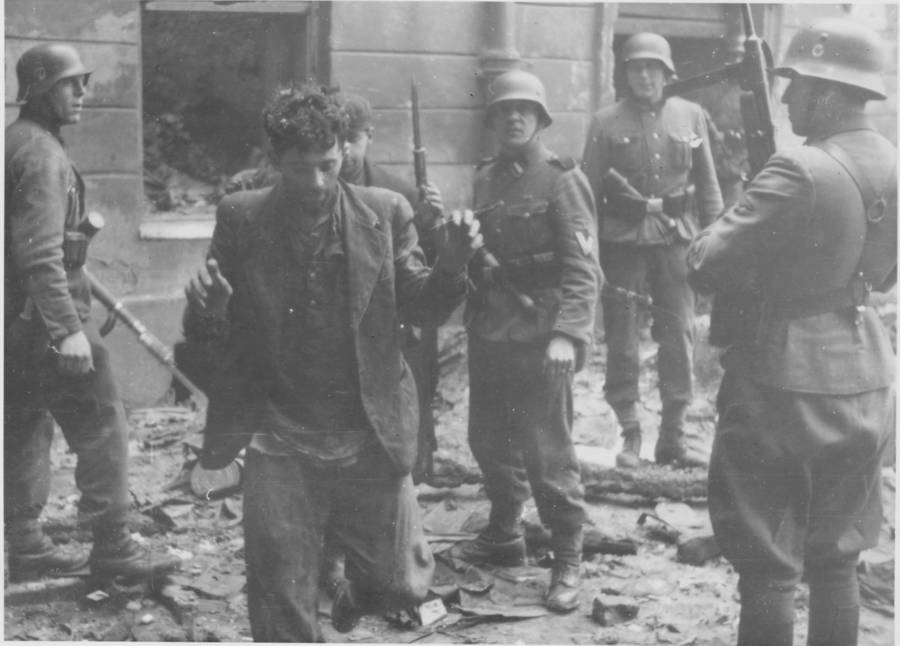

A Jewish man is forced out of hiding during the Warsaw ghetto uprising.
Warsaw, Poland. April or May 1943.
Wikimedia Commons
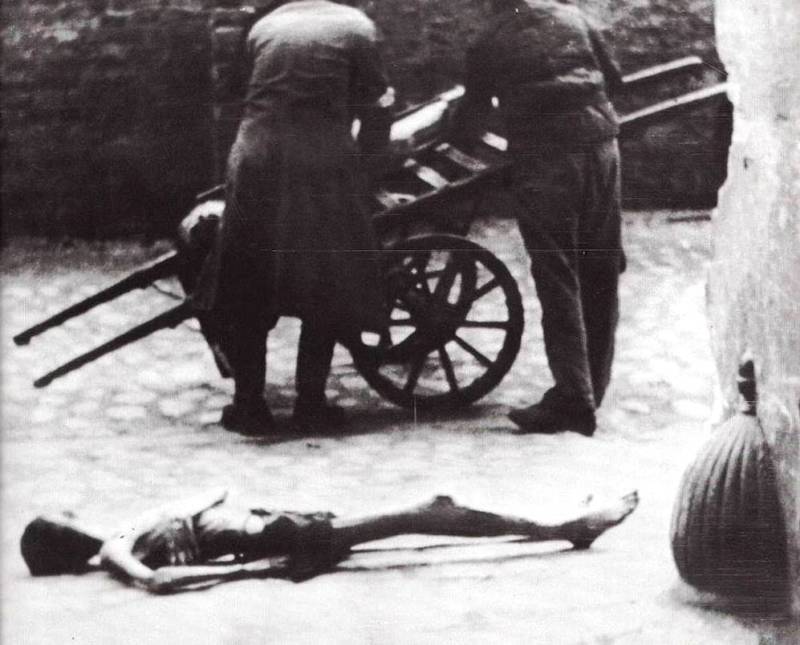


An emaciated corpse, likely dead from hunger, is collected off the streets. Warsaw, Poland. Circa 1941-1942.
Wikimedia Commons


A housing block burns during the suppression of the Warsaw ghetto uprising.
Warsaw, Poland. April or May 1943.
Wikimedia Commons


Krakow after the deportation of the Jewish population. Their meager possessions litter the streets.
Krakow, Poland. 1943.
Wikimedia Commons
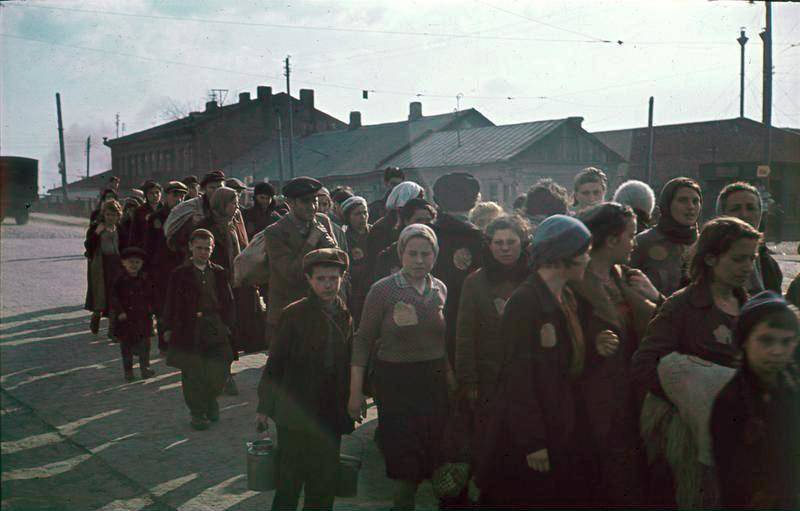

The women and children of the Minsk Ghetto walk down the streets, the star of David marking them as Jews.
Minsk, Belarus. Circa 1941.
Wikimedia Commons



Nazi soldiers stand over the dead bodies of Jewish civilians they have shot dead. Warsaw, Poland. April or May 1943.
Wikimedia Commons
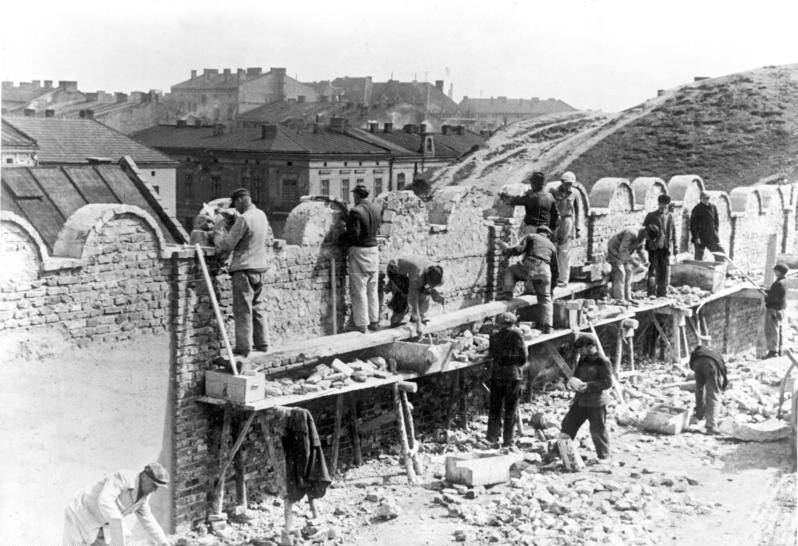


Building the wall to the Krakow ghetto.
Krakow, Poland. May 1941.
Wikimedia Commons
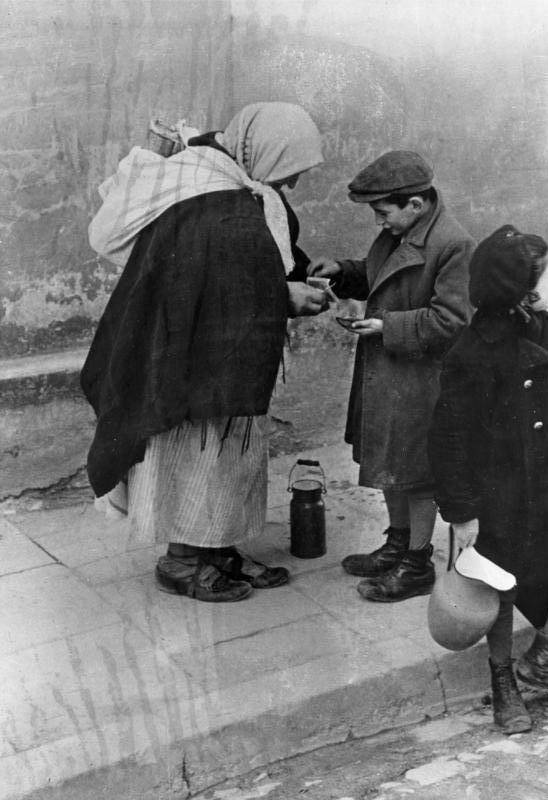

A woman smuggles contraband milk into the ghetto and sells it to a starving child.
Krakow, Poland. May 1941.
Wikimedia Commons
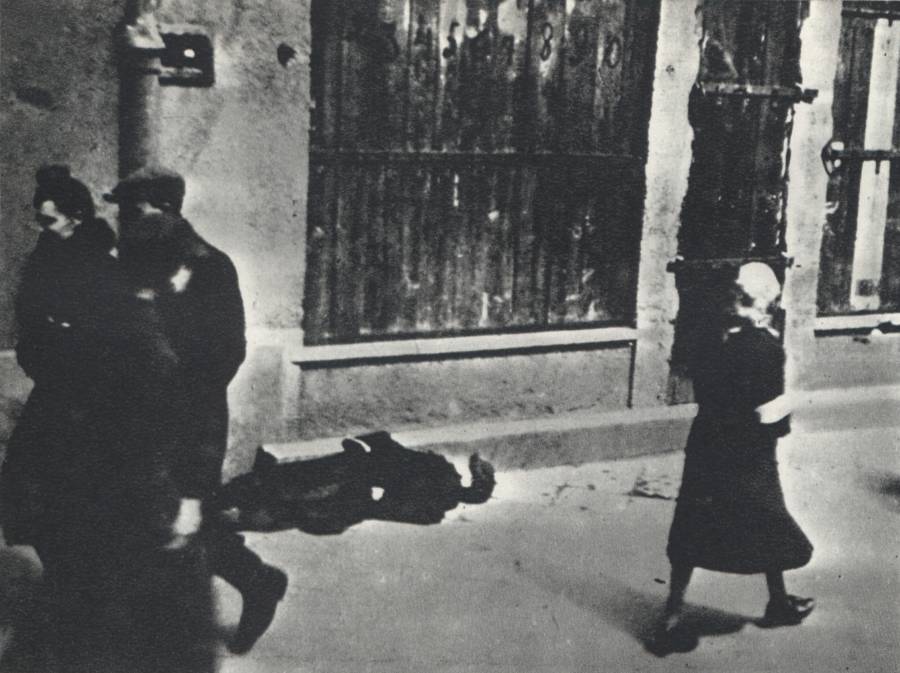
A dead body lies on the streets of the Warsaw ghetto.
Warsaw, Poland. Circa 1940-1943.
Wikimedia Commons
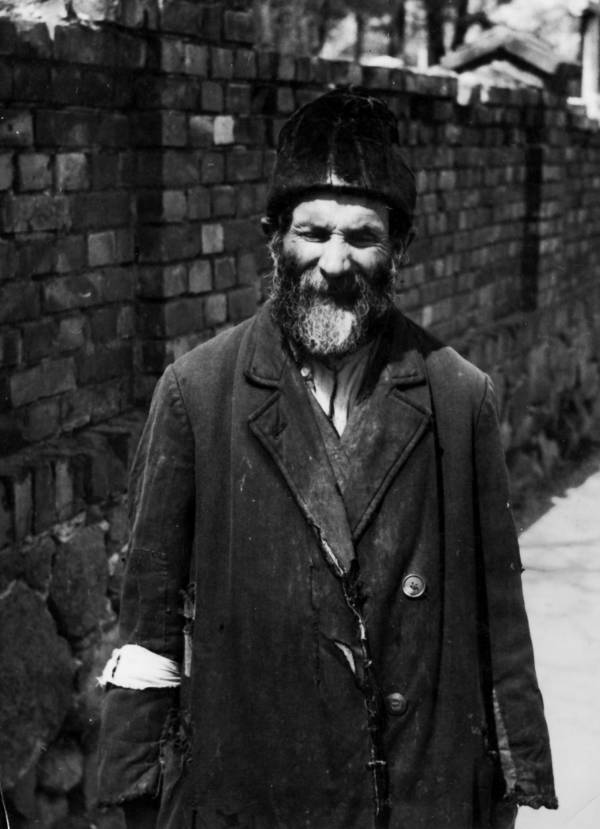

An elderly man living inside of a ghetto.
Warsaw, Poland. Circa 1940-1943.
Wikimedia Commons
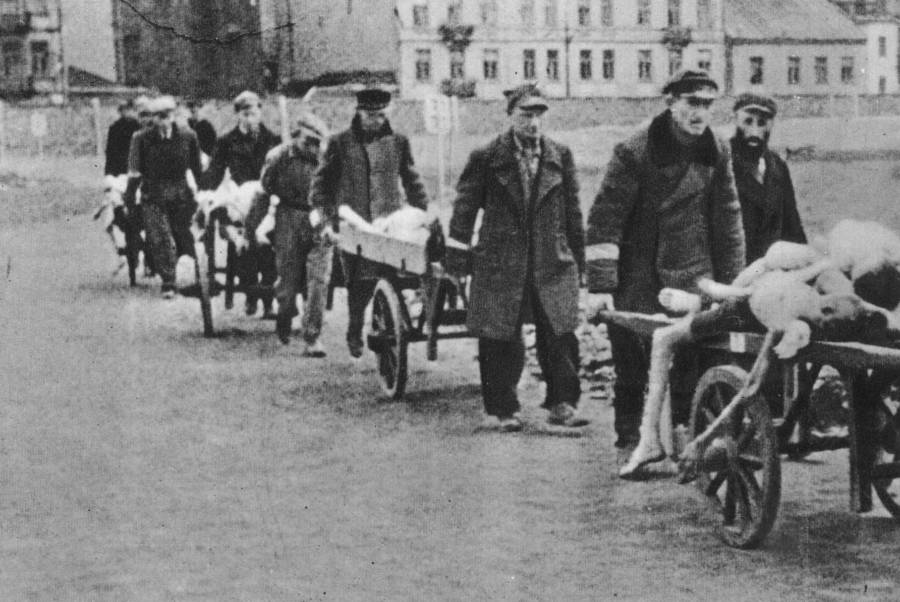

Carts full of corpses are carried off to the cemetery. 
Warsaw, Poland. Circa 1941-1942.
Wikimedia Commons


A Jewish policeman, conscripted by the Nazis to constrict the freedoms of his own people, stands watch by a doorway.
Warsaw, Poland. Circa 1940-1943.
Wikimedia Commons
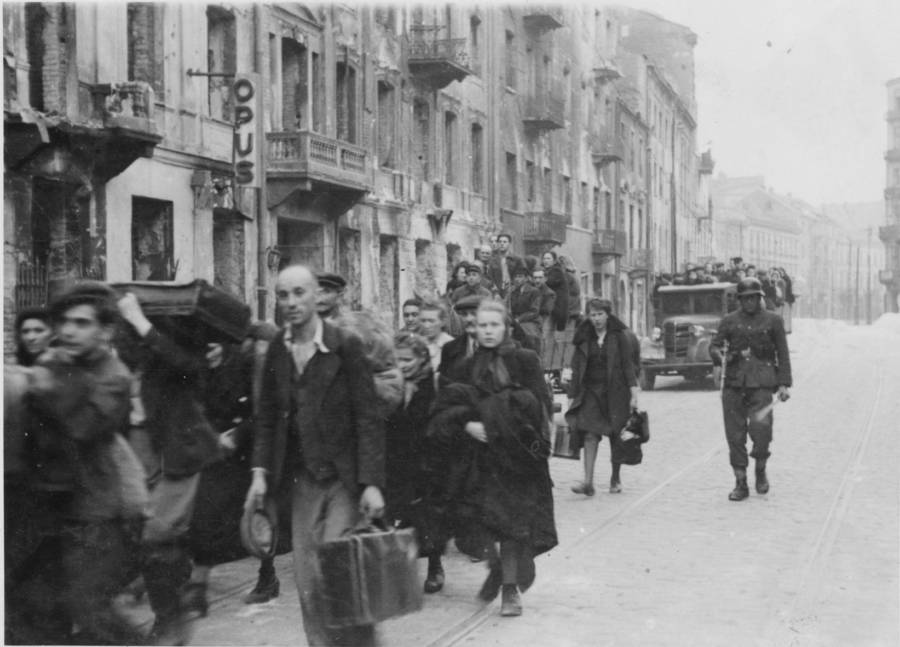

Captured Jews are marched off for deportation.
Warsaw, Poland. April or May 1943.
Wikimedia Commons
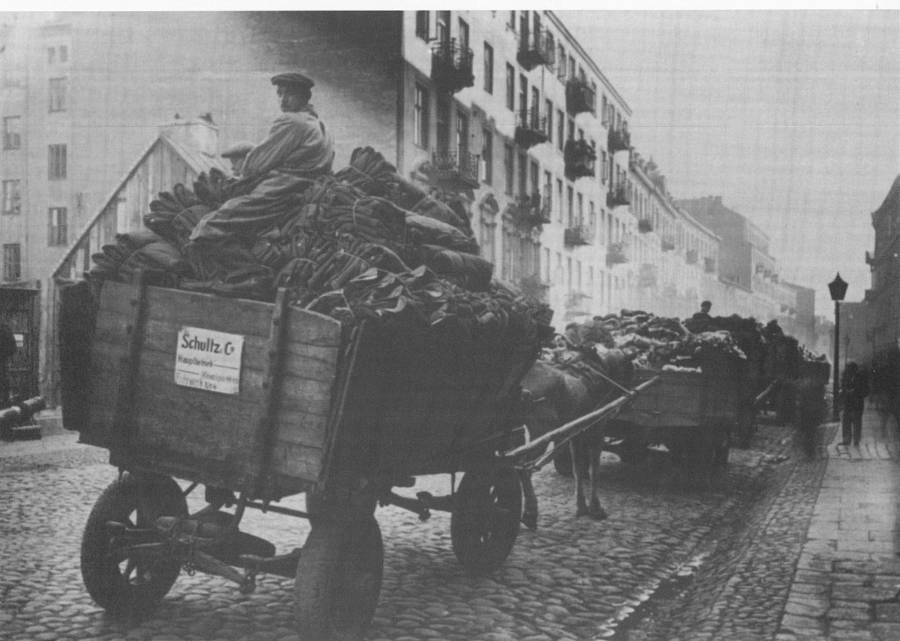

A cart full of clothes rolls through the Warsaw ghetto.
Warsaw, Poland. Circa 1942-1943.
Wikimedia Commons
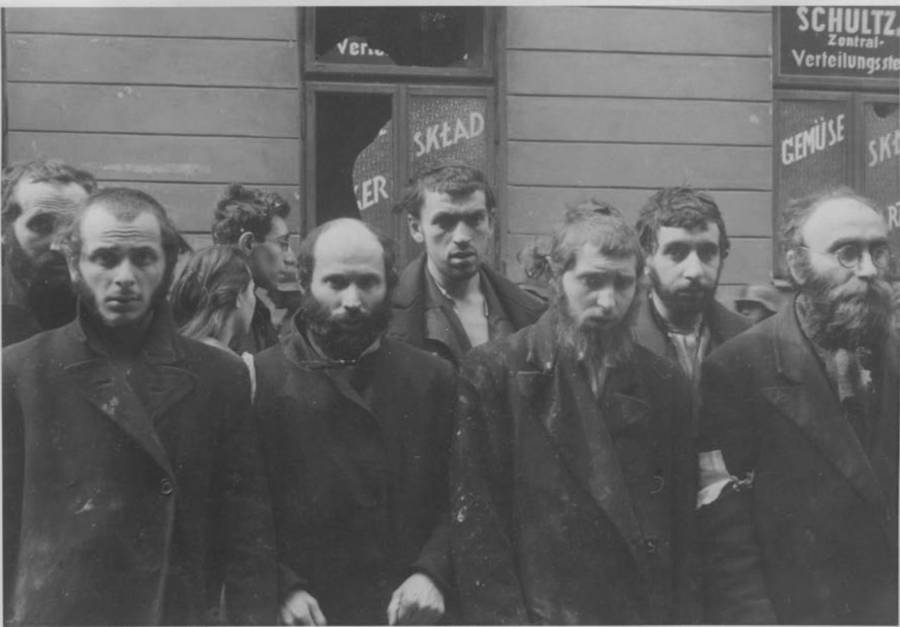

Jewish rabbis are rounded up by SS officers.
Warsaw, Poland. April or May 1943.
Wikimedia Commons
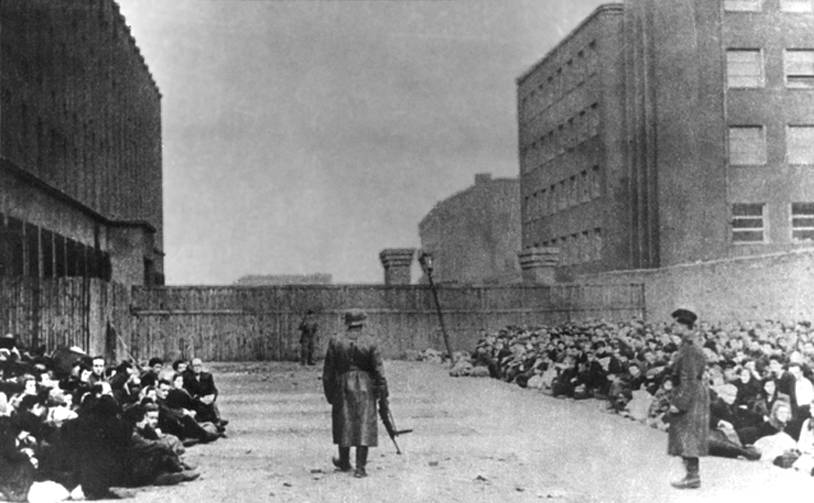


Jews sit and await deportation to the death camps. Warsaw, Poland.
April or May 1943.
Wikimedia Commons
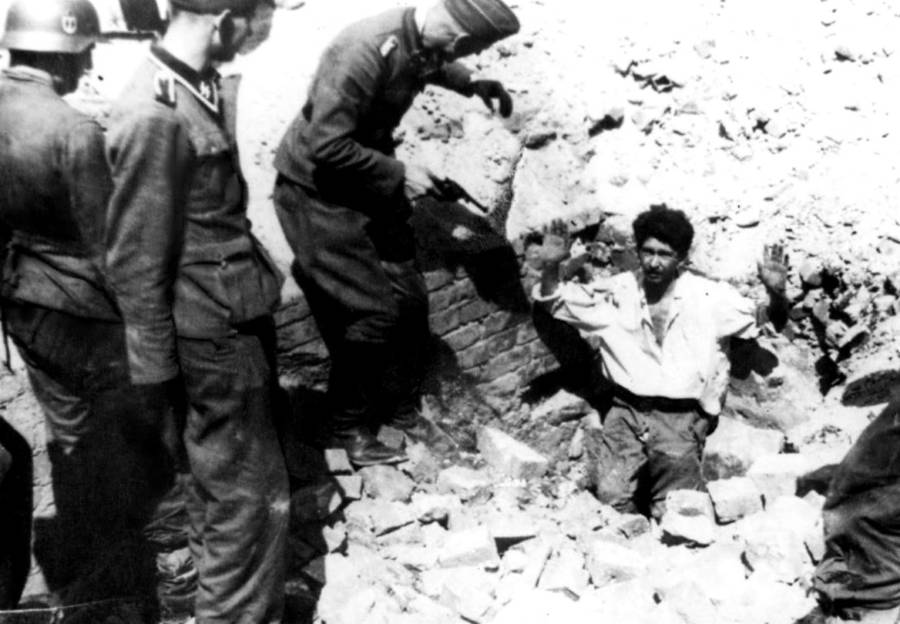


A man comes out of hiding with his hands up.
Warsaw, Poland. April or May 1943.
Wikimedia Commons



The workers of a forced labor factory, where Jewish slaves were forced to make helmets for the Nazis, learn that they will not be spared. Warsaw, Poland. April or May 1943.
Wikimedia Commons



Nazis patrol the burning ghetto of Warsaw.
Warsaw, Poland. April or May 1943.
Wikimedia Commons
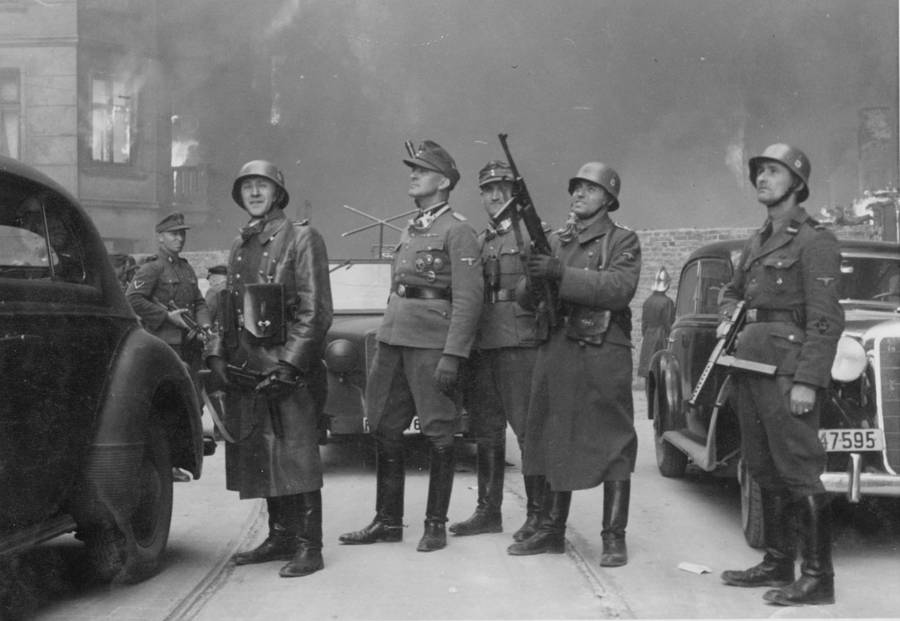


SS Officers enter Warsaw to shut down an uprising.
Warsaw, Poland. April or May 1943.
Wikimedia Commons
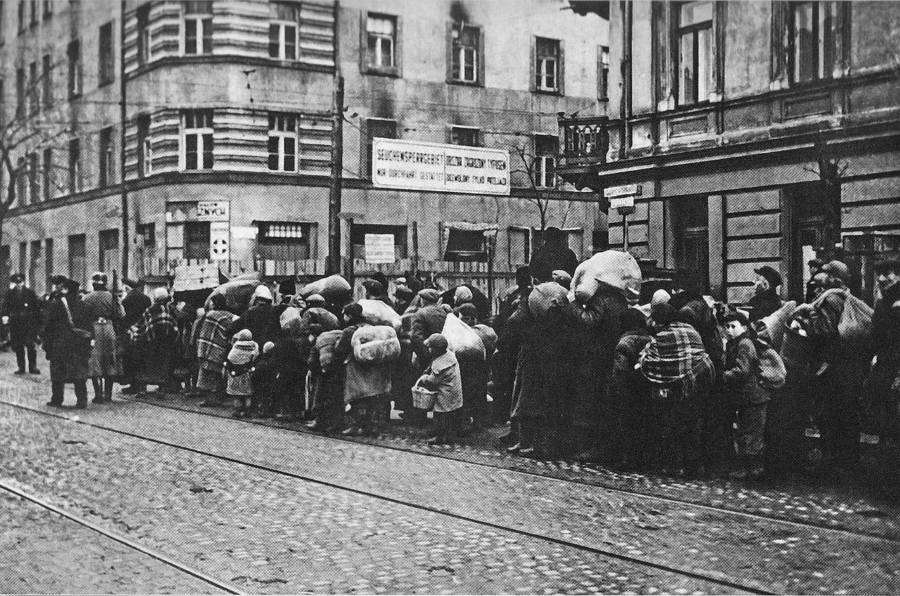


Polish families being deported into the Warsaw Ghetto.
Warsaw, Poland. Circa 1940-1942.
Wikimedia Commons
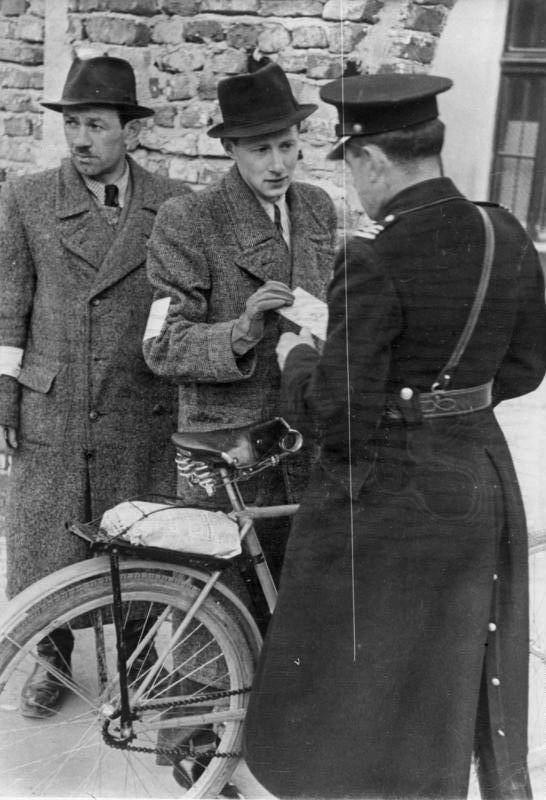


A Polish police officer checks the IDs of two Jewish men. Krakow, Poland.
Circa 1939-1945.
Wikimedia Commons
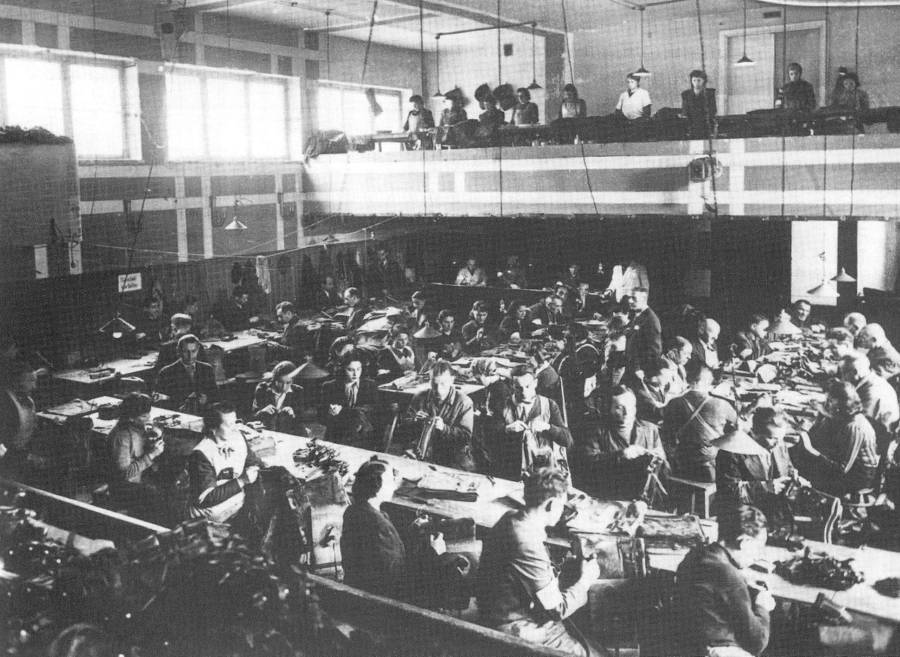


Jewish laborers work inside a sweatshop. Warsaw, Poland.
Circa 1942-1943.
Wikimedia Commons
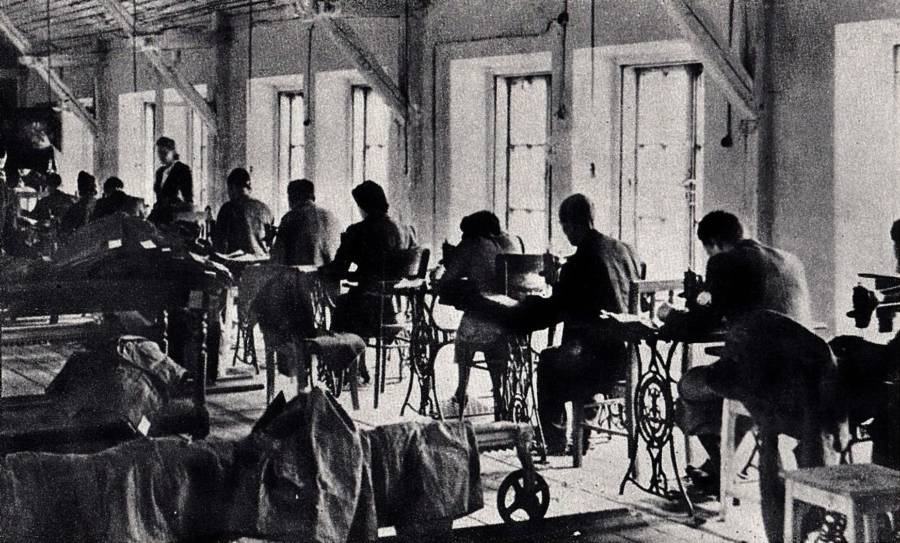


Inside of a sweatshop in a Jewish ghetto. Warsaw, Poland.
Circa 1939-1945.
Wikimedia Commons
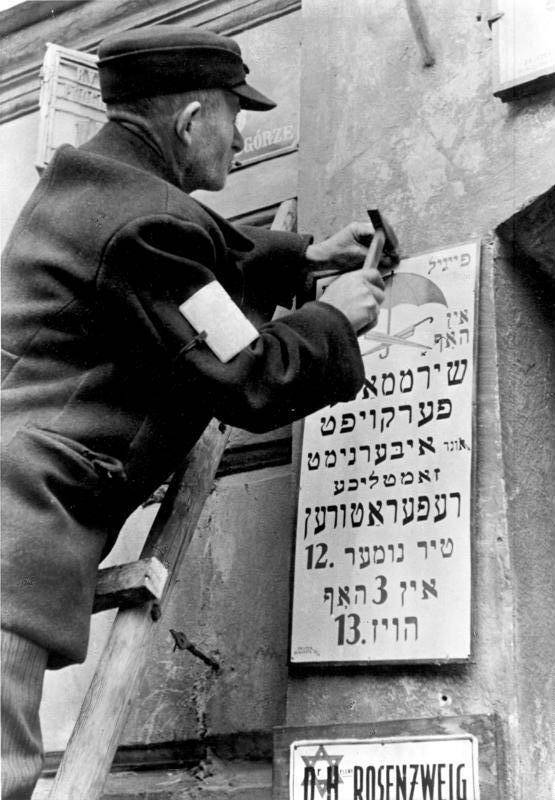


A Jewish doctor replaces his sign, on orders from the Nazis, to one written in Hebrew script and displaying the Star of David.
Krakow, Poland. May 1941.
Wikimedia Commons
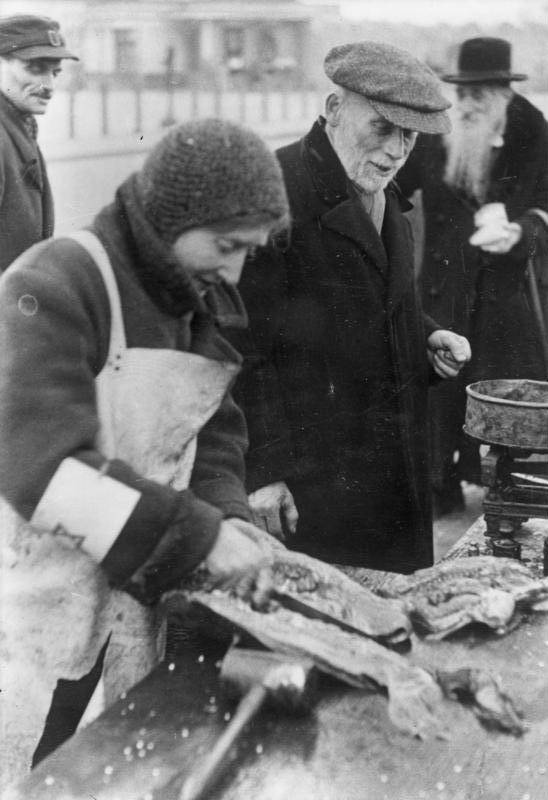


A fish stall inside of the Warsaw ghetto, during the early days of the Holocaust. Warsaw, Poland.
May 1941.
Wikimedia Commons
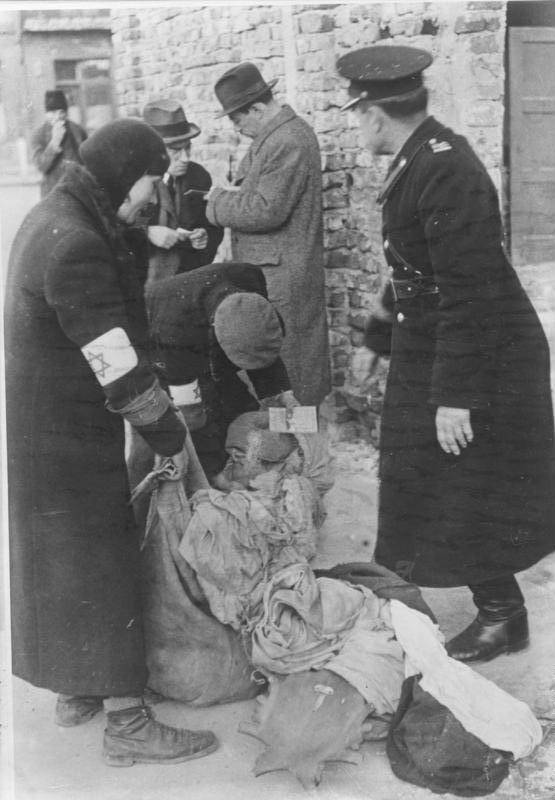


The Nazis crack down on smuggling to keep food from getting into the ghettos. Krakow, Poland. May 1941.
Wikimedia Commons
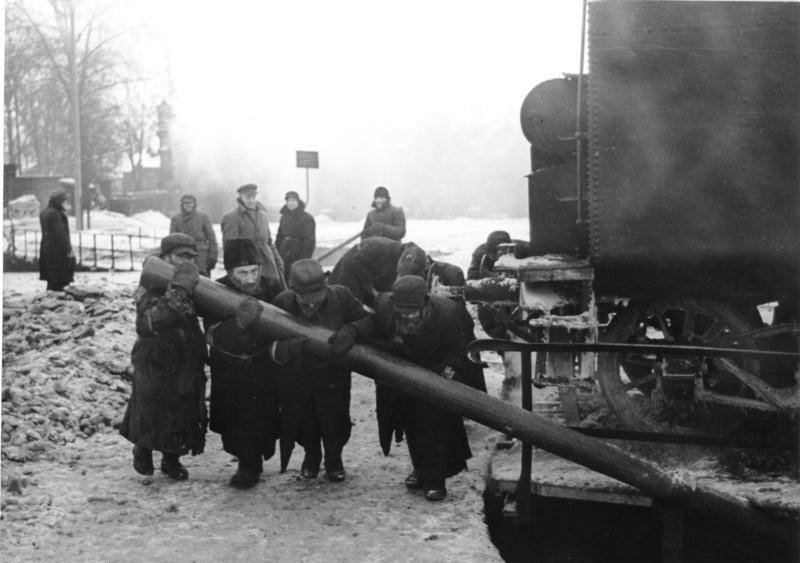


Jews put into forced labor work on the railway.
Minsk, Belarus. February 1942.
Wikimedia Commons
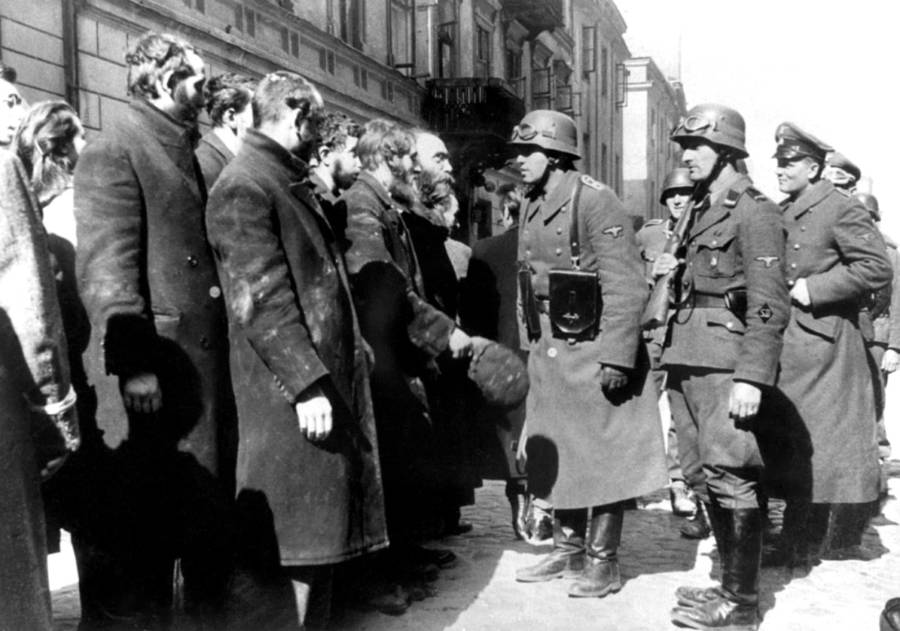

SS officers interrogate men inside the Warsaw ghetto.
Warsaw, Poland. April or May 1943.
Wikimedia Commons



A man is dragged out of hiding as the SS comes in to force the people of the Warsaw ghetto into the death camps.
Warsaw, Poland. April or May 1943.
Wikimedia Commons



Residents of the Warsaw ghetto sit on the curb, awaiting their fate.
Warsaw, Poland. April or May 1943.
Wikimedia Commons
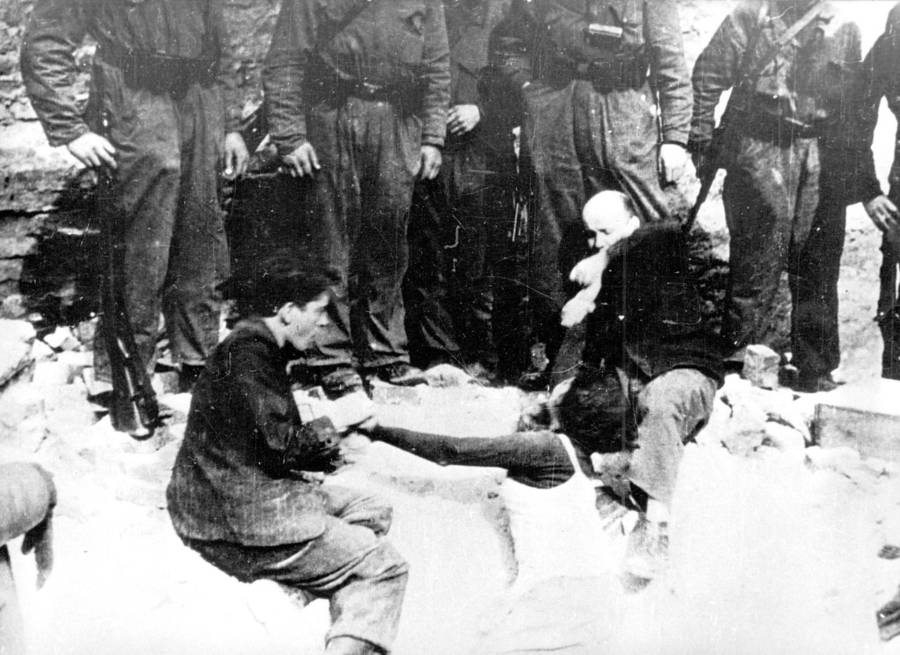


The SS opens the underground bunkers where some have hidden to avoid being dragged out of the ghetto and into the death camps.
Warsaw, Poland. May 1943.
Wikimedia Commons
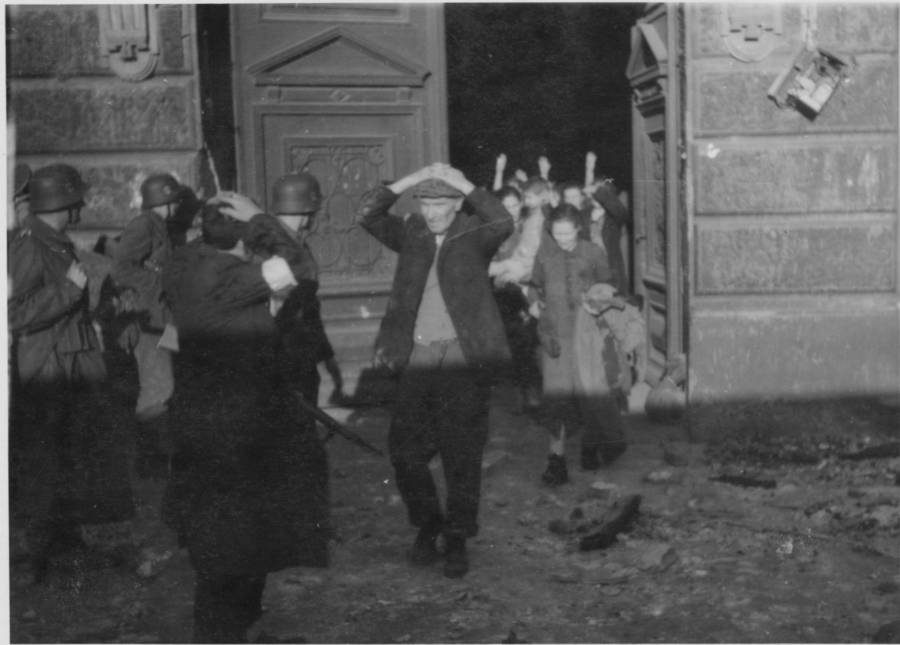


A family surrenders to the SS. Warsaw, Poland.
April or May 1943.
Wikimedia Commons
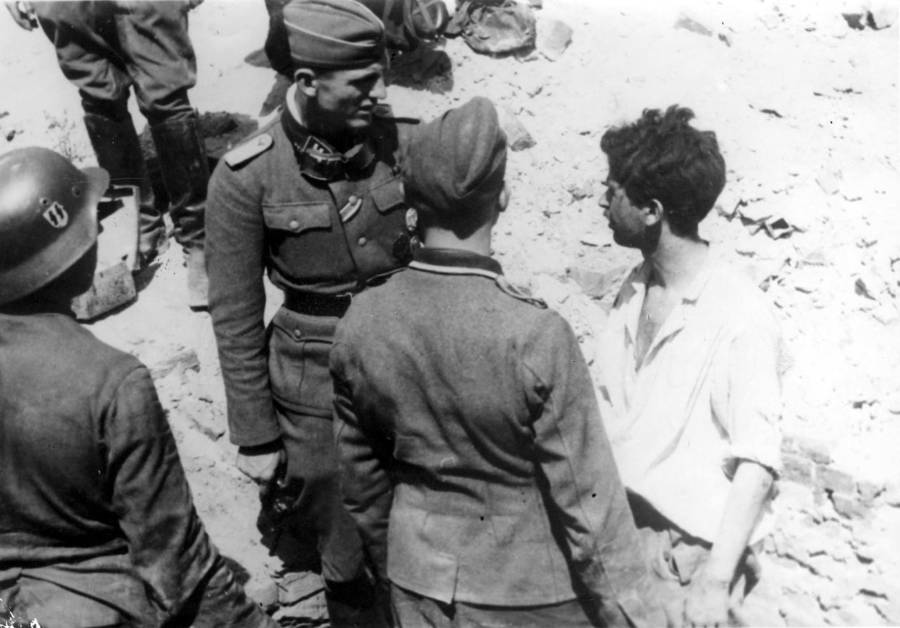


An SS lieutenant interrogates a man in the Warsaw ghetto. Warsaw, Poland.
May 1943.
Wikimedia Commons



Nazi soldiers discuss how best to evacuate and deport the Jewish workers inside of a factory.
Warsaw, Poland.
April 1943.
Wikimedia Commons



Men carry off a cart filled with the emaciated, starved corpses of children.
Warsaw, Poland. Circa 1941-1942.
Wikimedia Commons



A man covers his mouth with a handkerchief, struggling to breathe through the smoke. Warsaw, Poland. April or May 1943.
Wikimedia Commons
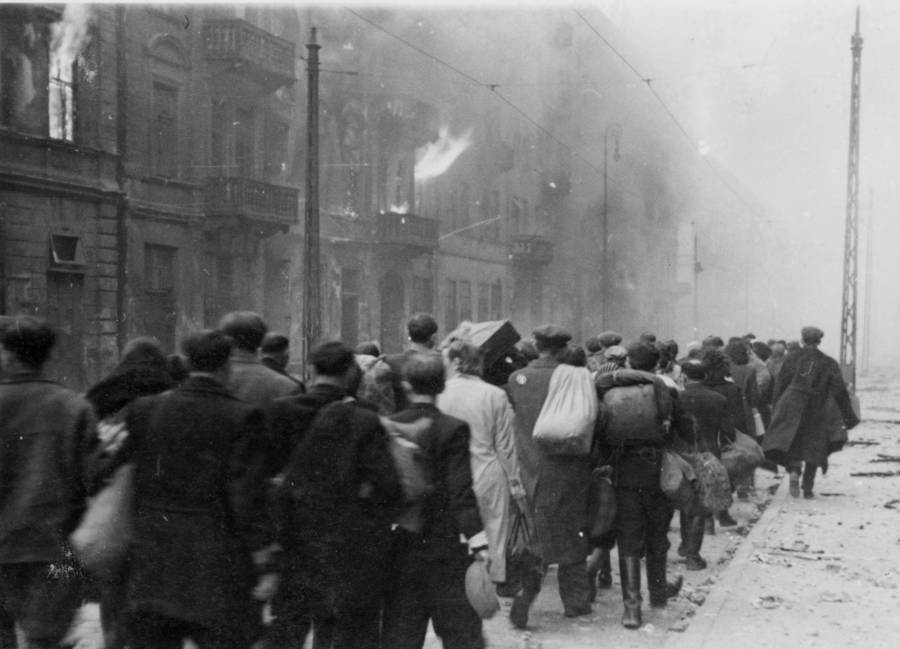


Jews captured during the Warsaw ghetto uprising are marched to a holding area for deportation.
Warsaw, Poland. April or May 1943.
Wikimedia Commons
Warsaw Residents Stripped Naked
Two men are stripped naked and photographed by Nazi SS soldiers. The Nazi officer who took the photo gave it the title: "The Dregs of Society."
Warsaw, Poland. April or May 1943.

Wikimedia Commons

Warsaw Ghetto On Fire
Nazi officers watch as the Warsaw ghetto burns.
Warsaw, Poland. April or May 1943.
Wikimedia Commons

Lenin Zhitkovichi Mass Grave
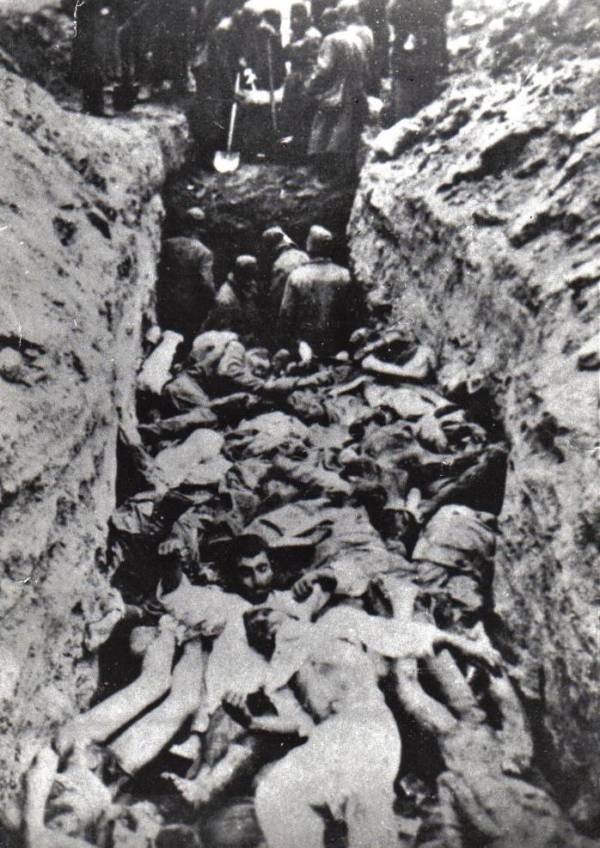
A mass grave outside of a ghetto, where people have been dragged out and shot.
Lenin Zhitkovich, USSR. August 1942.
Wikimedia Commons

Pulled Out Of Hiding
The ruins of a ghetto.
Warsaw, Poland. April or May 1943.
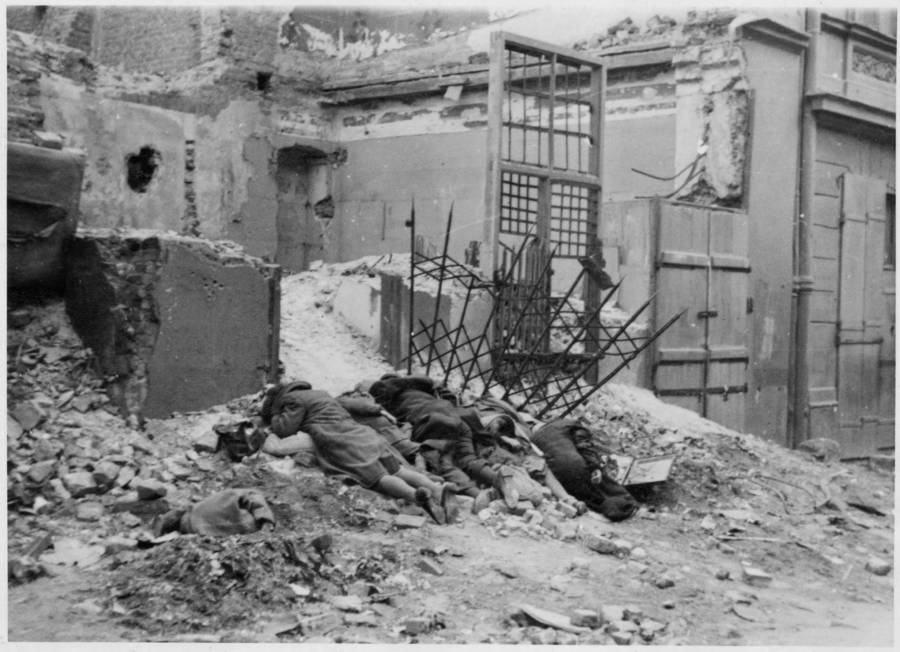
Wikimedia Commons

Bodies Of Executed Jews
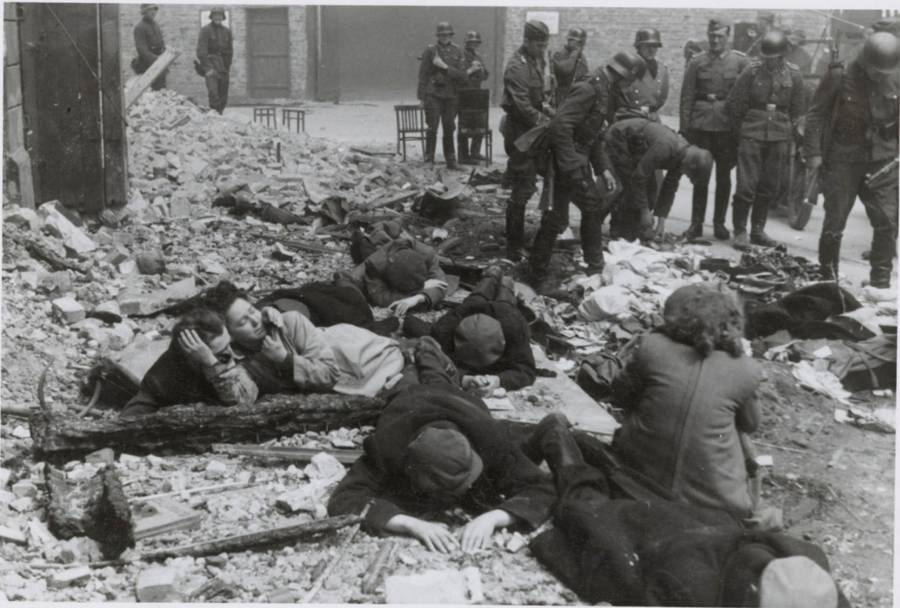
The dead bodies of executed Jews lie in the ruins of the Warsaw ghetto.
Warsaw, Poland. April or May 1943.
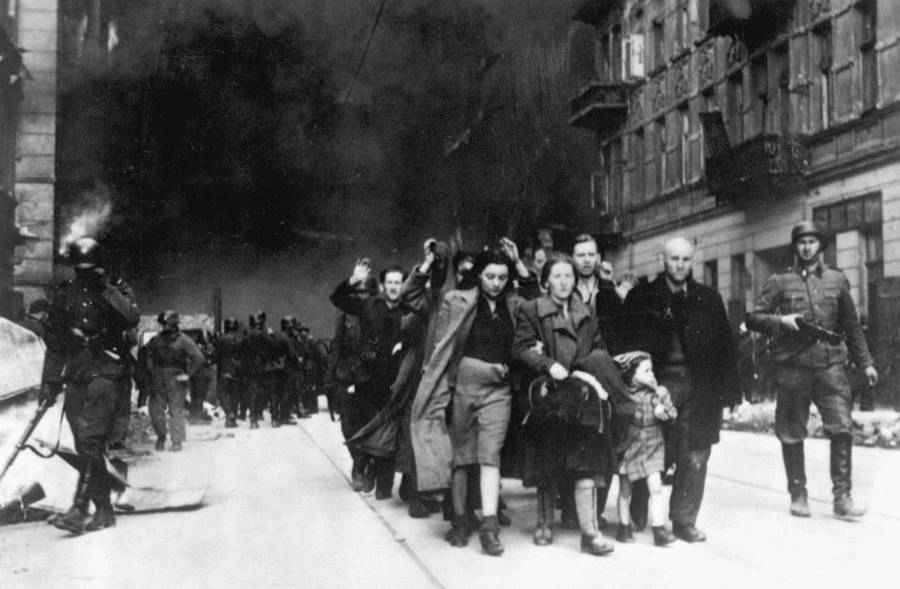
Wikimedia Commons

Marching To Death Camps
Captured Jews are lead through the burning ghetto in Warsaw. They will be sent to the death camps. 
Warsaw, Poland. April or May 1943.
Wikimedia Commons


like and Share...

Friday, January 18, 2019

She is known only as “Genie”

She is known only as “Genie”


The Horrific Story of ‘Genie’: the Feral Child Who Suffered at the Hands of Her Sadistic Father

She is known only as “Genie” — an alias to protect what privacy she had — because since she was just a toddler her entire life had been suppressed by the terror she endured all alone in a single, dark room.
Her case was one of the most cruel instances of social isolation in American history. In 1997, Walter Cronkite narrated a PBS documentary informing the public about her heartbreaking story.
What you’ll read below highlights this account.
Genie was born in 1957, and only 20 months old when her father Clark Wiley who, thinking she was mentally retarded, locked her up in one of the family’s bedrooms. The room was located at the back of the house. The windows were covered with aluminum foil to keep the sunlight and nosy neighbors out, and the only furnishings consisted of a cage with a chicken-wire lid and a child’s potty chair.
For nearly 11 years, she suffered at the hands of her sadistic father, locked to that chair with a homemade strapping device and hit with a “one-by-three-foot board” each time she made a noise. She was a feral child.
Under her paranoid father’s vicious rule, he also kept a gun in his lap at all times as a means of intimidation.
It wasn’t until Genie was 13-years-old that her abuse was discovered. On November 4, 1970, her mother, who was nearly blind, sought public assistance in Temple City, California, after leaving her husband. When a social worker met with the family, Genie’s appearance and condition gave away the sinister secrets. She wore diapers, couldn’t speak (she had the language and motor skills of a baby) and crawled along the floor like an animal. The social worker believed Genie was only six-years-old and autistic, but when her real age was discovered, she immediately contacted her supervisor, who subsequently alerted the Los Angeles County Sheriff’s Department.
When the family’s home, which was described by Genie’s brother as a “concentration camp,” was searched, what they found was shocking. Aside from just finding the room where Genie had been kept her entire life, the home was completely dark and all the blinds were drawn.
Upon investigation, law enforcement officials established that Genie had the physical development of an eight-year-old, and weighed only 59 pounds.
Jay Shurley, an expert in solitary confinement, described Genie’s case as the most distressing he had ever seen. “Solitary confinement is, diabolically, the most severe punishment, and in my experience, really quite dramatic symptoms develop in as little as fifteen minutes to an hour, and certainly inside of two or three days. And try to expand this to ten years boggles one’s mind,” he said.
Both of Genie’s parents were arrested and charged with child abuse, but just before her father was scheduled to appear before a judge, he shot and killed himself. Allegedly, the suicide note he left behind read, “the world will never understand.” He was buried with countless secrets about the horrors he committed in that household — never getting to tell his version of what really happened.
Her mother’s criminal case was eventually dropped after evidence established that she had been trying to escape her abusive husband, but was not given custody of her feral child. She was sent off to be cared for by a team of therapists and doctors.
“When we think about a genie, we think about a creature who emerges out of a bottle, or whatever, into society past childhood,” said Susan Curtiss, a linguistics graduate student from UCLA. She is the person who gave her the name “Genie.”
In the early 1970’s, she was used as a case study — “Developmental Consequence of Extreme Social Isolation” — under the supervision of Dr. David Rigler. She celebrated her fourteenth birthday at the children’s hospital in Los Angeles, and eventually she learned how to read and use sign language.
But despite a series of breakthroughs, there were also major setbacks.
The government agency funding all the research believed the project being conducted was a failure, and in the fall of 1974, the money stopped pouring in.
Although researchers had the best of intentions, she was inevitably exploited and abused by a series of caregivers and foster parents. After being sent to live at a foster care home for special needs children, and one that was extremely religious, she retreated.
In 1977, she was able to communicate at a children’s hospital that her foster parents had physically punished her for vomiting. Since that moment, Genie’s speech never recovered. Once turning 18, the worst thing of all happened: she moved back in with her mother into her childhood home of horrors. Of course, that situation didn’t work out, either, and she was eventually returned to the system.
Nobody knows what really happened to that little girl who spent nearly eleven years locked up in a dark room all alone.
Her last known whereabouts was a private institution in Southern California for the mentally undeveloped, but that location remains unknown.
Curtiss said she spent 20 years searching for Genie without ever getting any leads.

Tuesday, January 8, 2019

Magnesium-Rich Foods Plus Proven Benefits

History

Magnesium was first isolated by English scientist Sir Humphrey Davy in 1808. It is named after Magnesia, a district in Thessaly, Greece, and is closely related to the minerals magnetite and manganese.

Not only is magnesium is the fourth most abundant mineral in the human body, but it’s also the seventh most abundant element in the crust of the Earth and the eighth most abundant element in the entire universe.

There are many different forms of magnesium, making this an incredibly versatile mineral. It can be combined with water to form milk of magnesia, an antacid and laxative, or made into epsom salt, which has been used for hundreds of years to soothe aches and pains.

Plus, magnesium falls just behind iron and aluminum as the most commonly used structural metal. It has been used to construct everything from aircrafts to automobiles to electronics and more.

Interestingly enough, despite how widespread magnesium is, its pure form is not found in nature as it readily reacts with other elements.

Despite the widespread availability of magnesium in the diet, the World Health Organization reported that less than 60 percent of adults in the United States are meeting the adequate intake values for magnesium.

So what is the best source of magnesium, and how can you ensure you’re getting enough in your diet? Here’s what you need to know about this important nutrient and its impact on your health — and the top magnesium-rich foods.

Magnesium plays a central role in just about every bodily process, from the synthesis of DNA to the metabolism of insulin. Low levels of this crucial mineral have even been tied to an entire laundry list of chronic conditions like Alzheimer’s, diabetes and heart disease. It goes without saying that no nutritious diet can really ever be complete without a few servings of magnesium-rich foods.

Fortunately, there are plenty of delicious options to help you meet your daily needs and prevent magnesium deficiency. There’s a good amount of magnesium in superfoods like avocado, almondsand figs, plus several other nutritious foods as well.

What Is Magnesium?

Magnesium is an element and mineral found throughout nature and one of the body’s electrolytes. In the body, it is the fourth most abundant mineral and is absolutely crucial to many aspects of health.

About 99 percent of your body’s total magnesium is stored in your bones, muscles and soft tissues while only about 1 percent is concentrated in the blood. Low levels of magnesium have been associated with a number of conditions and diseases, including Alzheimer’s, type 2 diabetes, insulin resistance, migraines, hypertension, attention deficit hyperactivity disorder and heart disease.

Unfortunately, it’s possible to have a magnesium deficiency even with a healthy diet. Therefore, it’s important to ensure you’re eating plenty of magnesium foods and getting enough of this vital mineral to maintain optimal health.

Some of the best sources of magnesium are leafy greens, such as spinach of chard, but there are plenty of other foods with magnesium as well. There are even magnesium fertilizers that have been tested to increase the magnesium availability of soils, potentially helping foods with magnesium absorption.

Additionally, magnesium supplements, such as magnesium citrate, and magnesium oil are also available for those who may have a more severe magnesium deficiency.

Transdermal magnesium supplementation is another way to utilize magnesium, though research is limited on its effectiveness. What is transdermal magnesium? It’s applying magnesium in the form of magnesium chloride topically to help absorb the mineral into the skin.

Top 10 Magnesium-Rich Foods

Here the top 10 magnesium-rich foods based on magnesium content (values of mg in food from the USDA):

Spinach, cooked — 1 cup: 157 milligrams (39 percent DV)
Swiss chard, cooked — 1 cup: 150 milligrams (38 percent DV)
Dark Chocolate — 1 square: 95 milligrams (24 percent DV)
Pumpkin seeds, dried — 1/8 cup: 92 milligrams (23 percent DV)
Almonds — 1 ounce: 75 milligrams (19 percent DV)
Black beans — 1/2 cup: 60 milligrams (15 percent DV)
Avocado — 1 medium: 58 milligrams (15 percent DV)
Figs, dried — 1/2 cup: 50 miligrams (13 percent DV)
Yogurt or kefir — 1 cup: 46.5 milligrams (12 percent DV)
Banana — 1 medium: 32 milligrams (8 percent DV)

Magnesium Benefits + Benefits of Magnesium-Rich Foods
Alleviates PMS Symptoms
Reduces Blood Pressure
Boosts Performance
Relieves Inflammation
Prevents Migraines
Improves Blood Sugar
Fights Against Depression
Enhances Sleep Quality

1. Alleviates PMS Symptoms

Premenstrual syndrome, or PMS, is a group of symptoms that occur in women one to two weeks before menstruation. Symptoms can vary but typically include mood swings, weight gain, food cravings, water retention, fatigue, irritability, sore breasts and digestive issues.

Some studies have shown that magnesium may be able to help effectively reduce these symptoms. In one 2010 study, a combination of magnesium and vitamin B6 was found to significantly decrease PMS symptoms compared to a control group. (4) Another study published in the Journal of Women’s Healthshowed that 200 milligrams of magnesium daily helped reduce the severity of several PMS symptoms, including weight gain, swelling, bloating and breast tenderness.

Next time you start to feel the cramps and bloating coming on, try loading up your diet with plenty of magnesium-rich foods to ward off symptoms. Besides upping your magnesium intake, a few other natural remedies for PMS include taking vitamin B6, chasteberry and progesterone cream.

2. Reduces Blood Pressure

High blood pressure, or hypertension, is a common condition that affects millions of people worldwide. Increased blood pressure forces your heart to work harder, which can put a strain on the heart muscle and eventually lead to heart disease.

Filling your diet with magnesium-rich foods may be able to help keep your blood pressure in check to promote better heart health. A study in Mexico even found that taking magnesium supplementation reduced both systolic and diastolic blood pressure in adults with high blood pressure.

For best results, make sure you’re getting plenty of foods high in magnesium and potassium in your diet. Upping your intake of food sources of potassium may also help regulate blood pressure by increasing the excretion of sodium through the urine. Other natural ways to lower blood pressure include eating lots of fiber-rich foods, limiting your sodium intake and getting in more omega-3 fatty acids.

3. Boosts Performance

Because of its role in muscle function and energy production, magnesium is believed to have an impact on exercise performance. During strenuous exercise, it’s estimated that magnesium requirements increase by 10 percent to 20 percent.

A study published in the American Journal of Clinical Nutrition looked at the effects of magnesium on performance in 124 elderly women. After 12 weeks, daily supplementation with magnesium oxide was found to improve physical performance compared to a control group.

Another study from Germany showed that triathletes who were given magnesium supplementation for four weeks had improvements in their swimming, cycling and running times.

Besides eating plenty of magnesium-rich foods, be sure to include some of the other best foods for athletes in your diet to enhance physical performance even more.

4. Relieves Inflammation

Inflammation is a normal immune response designed to help protect the body from infection and injury. Chronic inflammation, on the other hand, can actually contribute to health problems and chronic disease.

Low levels of magnesium have been linked to inflammation in several studies. A study in 2014, for example, found that both low magnesium intake and low levels of magnesium in the blood were associated with higher levels of markers of inflammation.

Meanwhile, increasing your intake of magnesium has been shown to decrease inflammation. A study published in the Archives of Medical Research showed that taking magnesium chloride was able to reduce levels of inflammation in 62 adults with prediabetes.

It’s no surprise that many foods high in magnesium make the list of top anti-inflammatory foods as well. Most of these foods also contain beneficial antioxidants and phytonutrients that can help keep inflammation at bay.

5. Prevents Migraines

Migraines are a type of headache disorder characterized by migraine symptoms like nausea, sensitivity to light and sound, and a severe throbbing pain. This debilitating condition is also incredibly common. In 2012, an estimated 14 percent of American adults reported suffering from migraines in the past three months.

Low levels of magnesium may contribute to migraines, and some studies have found that magnesium supplementation could even reduce migraine frequency.

One study measured the effects of magnesium supplementation in 86 children with frequent migraines. Children received either a magnesium oxide supplement or a placebo for 16 weeks. At the end of the study, those who took magnesium had significantly less headache frequency and lower headache severity compared to the placebo group.

Another study found that magnesium was more effective and fast-acting in providing migraine relief than a common medication.

In addition to including plenty of magnesium-rich foods in your diet, following a well-rounded diet and minimizing your intake of refined sugars and processed meats can also help you get rid of a migraine.

6. Improves Blood Sugar

Some studies have found that taking a magnesium supplement benefits your blood sugar and can even prevent insulin resistance.

Insulin is the hormone responsible for transporting sugar (glucose) from the blood to the tissues to be used as fuel. If you consistently eat lots of carbs and refined sugar, you will produce more and more insulin as your body tries to keep up with the increased demand. Sustaining high levels of insulin for long periods of time can cause insulin resistance, decreasing its ability to shuttle glucose effectively, resulting in high blood sugar.

A study published in the journal Diabetes Care found that oral magnesium supplementation improved insulin sensitivity and reduced blood sugar levels in diabetic patients with low magnesium levels.

Additional research has found that magnesium could protect against diabetes. One study followed 4,497 participants for 20 years and found that those with the highest intake of magnesium were 47 percent less likely to develop diabetes.

Other ways to help maintain normal blood sugar include getting in plenty of physical activity, managing your stress levels, filling up on fiber and protein, and keeping your carb intake in check.

7. Fights Against Depression

Magnesium has potent mood-boosting properties and can help fight against depression. In fact, some studies have even found that a low intake could be associated with an increased risk of depression. In one study, young adults with the lowest intake of magnesium were at a 22 percent greater risk of developing depression.

Fascinatingly, some research has even found that magnesium could be as effective as antidepressants in treating depression. One study published in Magnesium Research compared the effects of magnesium supplementation with an antidepressant medication and found that magnesium supplements were equally effective in the treatment of depression. (19) Another recent study in 2017 found that magnesium supplementation significantly improved symptoms of both depression and anxiety after just six weeks.

Combine magnesium with other natural remedies for depression, such as eating lots of probiotic-rich foods, getting in plenty of vitamin D, and minimizing your intake of refined carbs and sugar.

8. Enhances Sleep Quality

If you suffer from insomnia and counting sheep just isn’t doing the trick, you may want to consider increasing your intake of magnesium-rich foods. Research has shown that there may be a connection between magnesium and sleep, with some studies showing that magnesium supplementation could help reduce insomnia.

One study out of Iran showed that taking a magnesium supplement reduced insomnia severity, increased sleep time and decreased the amount of time needed to fall asleep in 46 elderly participants. Another study found that a supplement containing a mix of magnesium, melatonin and zinc improved sleep quality in residents at a long-term care facility.

Be sure to pair magnesium with other natural insomnia-busters and natural sleep aids like calcium, essential oils and valerian root to maximize results.

Why Your Body Needs Magnesium

Magnesium is one of the most important minerals when it comes to maintaining optimal health. In fact, magnesium is involved in more than 300 reactions in the body and is needed for many important bodily functions, including:

DNA synthesisMuscle contractionsBlood pressure regulationProtein synthesisInsulin metabolismNerve transmissionReproduction

Magnesium deficiency has been linked to a number of health conditions, such as heart disease, migraines, insulin resistance, type 2 diabetes, Alzheimer’s and attention deficit hyperactivity disorder.

Eating plenty of foods rich in magnesium is key to keeping your magnesium levels up and minimizing your risk of adverse side effects. For men, it’s recommended to get 400–420 milligrams per day, and women need 310–320 milligrams daily.

Magnesium-Rich Foods Recipes

Getting your daily dose of magnesium doesn’t have to be difficult. By incorporating a few servings of magnesium foods each day, you can easily reap the benefits of this essential mineral and prevent deficiency. Here are a few recipes using magnesium-rich foods that a dietitian would approve to get you started:

Strawberry 
Spinach 
Salad with Poppy Seed Dressing
Dark Chocolate 
Peanut Butter 
Banana Bites
Spicy Roasted Pumpkin Seeds
Garlicky Swiss Chard and Chickpeas
Avocado 
Chocolate Mousse

Other foods to incorporate that provide dietary magnesium include edamame, raisins, cashews and the top 10 foods listed above containing magnesium.


Precautions

If you’re getting your magnesium from food sources, you don’t need to worry about any magnesium side effects from eating too much. Excess magnesium from food is simply filtered by the kidneys and excreted through the urine.

High doses of magnesium supplements, on the other hand, can cause adverse side effects like diarrhea, nausea and abdominal cramping. Extremely high doses can lead to a magnesium overdose and magnesium toxicity. The tolerable upper intake level for supplemental magnesium is 350 milligrams per day for those above the age of nine. Stick to the recommended magnesium dosage to sidestep negative effects on health.

Supplemental magnesium may also have some interactions with certain types of medications. Magnesium can attach to tetracyclines, a type of antibiotic, and decrease their effectiveness. Take these antibiotics at least two hours before or four to six hours after a magnesium-containing supplement.

Magnesium supplements may also lower blood pressure and relax the muscles. If you’re taking a medication for high blood pressure or a muscle relaxant, talk to your doctor before taking a magnesium supplement as it may alter the effects of these medications.

Final Thoughts

Magnesium is an important mineral involved in many aspects of health. Low levels have been linked to several conditions, such as Alzheimer’s, heart disease and diabetes.There are plenty of magnesium-rich foods to help you meet your daily needs. There is a good amount of magnesium in spinach, Swiss chard, dark chocolate, pumpkin seeds and more.Getting enough magnesium in your diet from magnesium food sources may come with a host of health benefits, from alleviating symptoms of PMS to fighting depression and improving sleep quality.Ideally, try getting as much magnesium as possible from real foods instead of supplements unless you have a severe deficiency. Magnesium-rich foods also supply other important nutrients that can help you optimize your health.