Confirmed coronavirus cases in the capital region have more than doubled since June 1 of 15
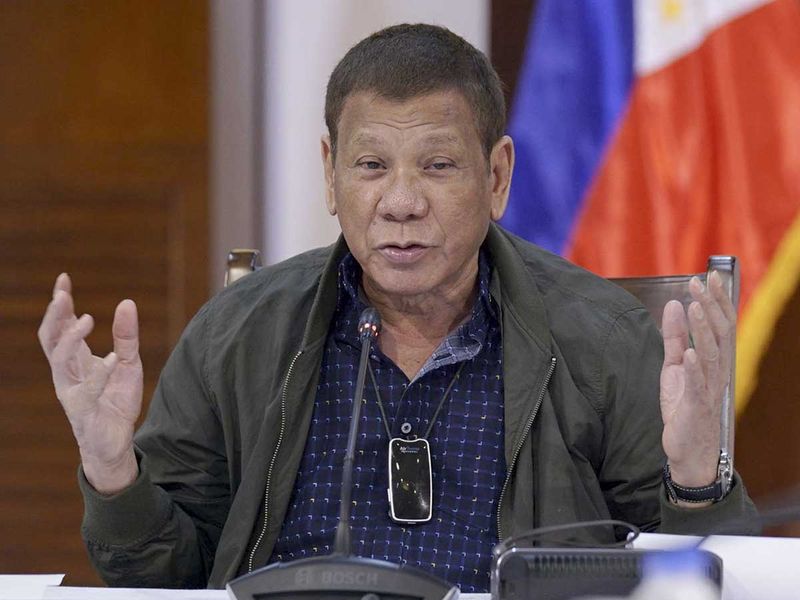
Philippines President Rodrigo Duterte is enforcing partial coronavirus restrictions in the capital for another two weeks, and warned that stricter curbs would be reinstated if the rise in new cases and deaths does not slow down.Image Credit: AP
2 of 15
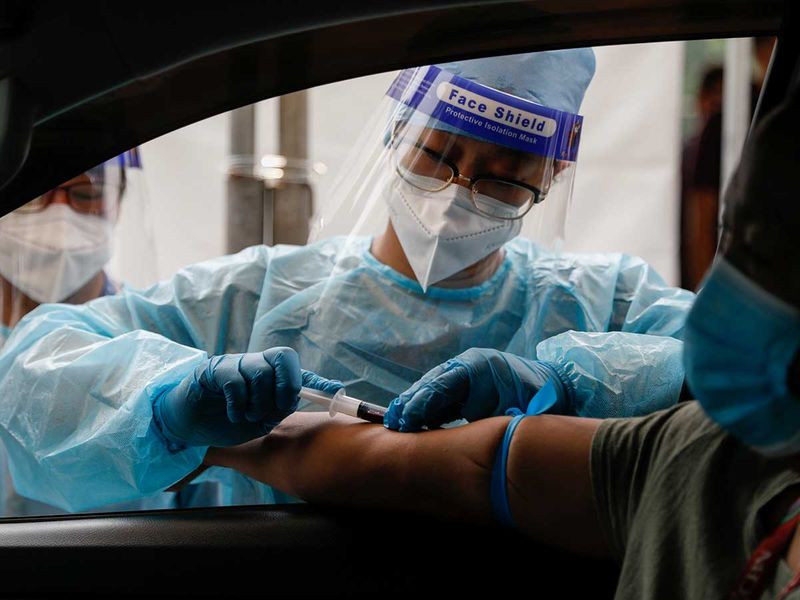
The Philippines this week recorded Southeast Asia's biggest daily jump in coronavirus deaths and saw hospital occupancy grow sharply, after a tripling of infections since a tough lockdown was eased on June 1 to allow more movement and commerce.Image Credit: Reuters
3 of 15
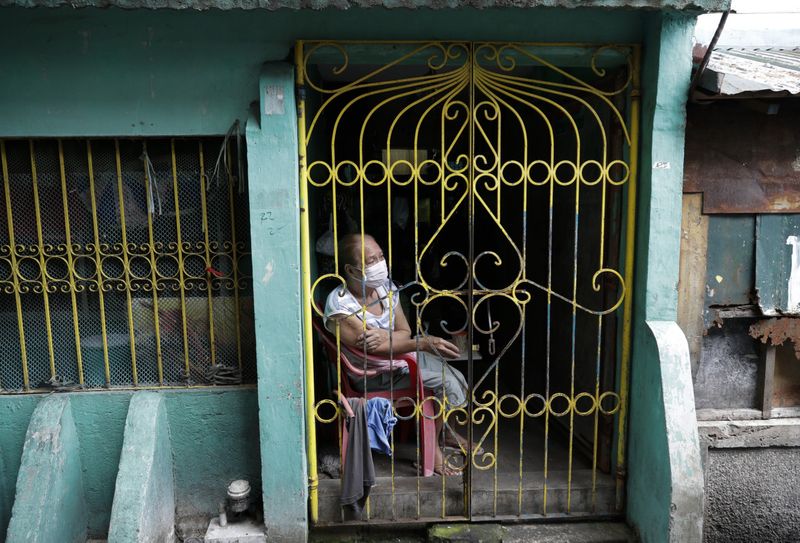
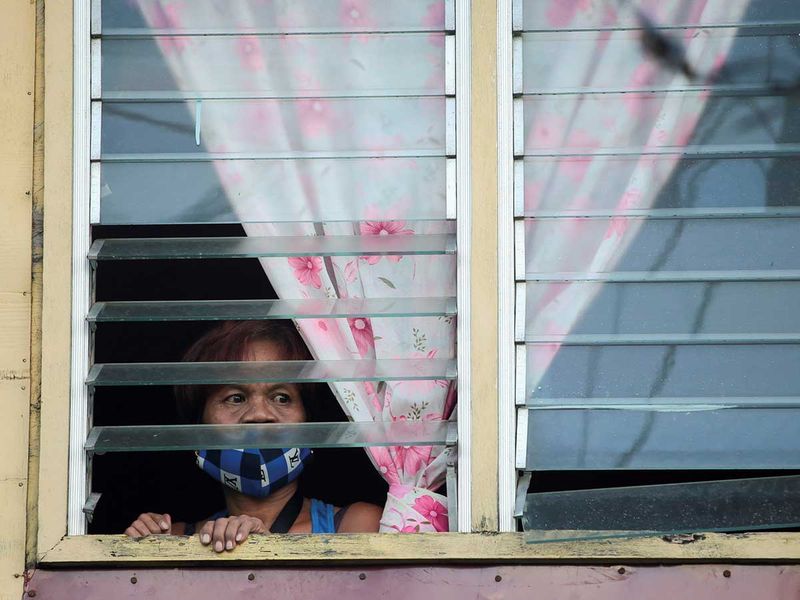
"It was clear during our discussion that if the spread of the virus in Manila will not slow, it is possible that stricter quarantine measures would be reimposed after two weeks," presidential spokesman Harry Roque said late on Wednesday. | A resident sits inside her home during the start of a lockdown.Image Credit: AP
4 of 15
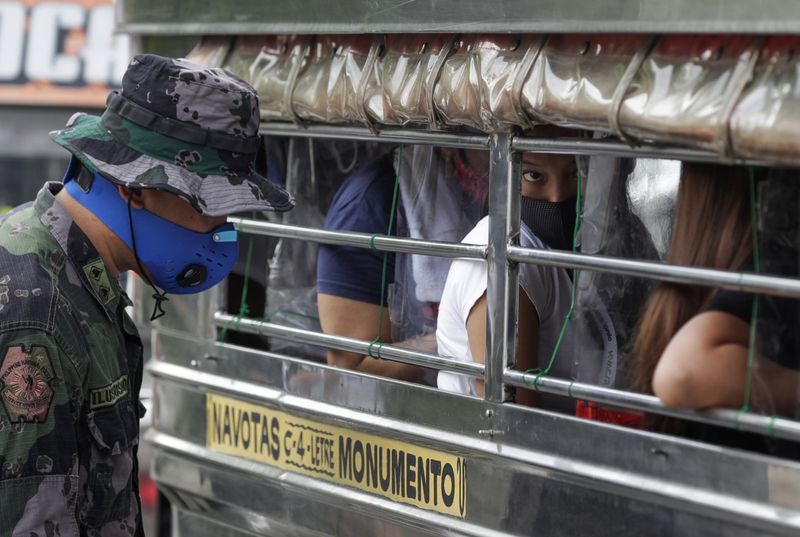
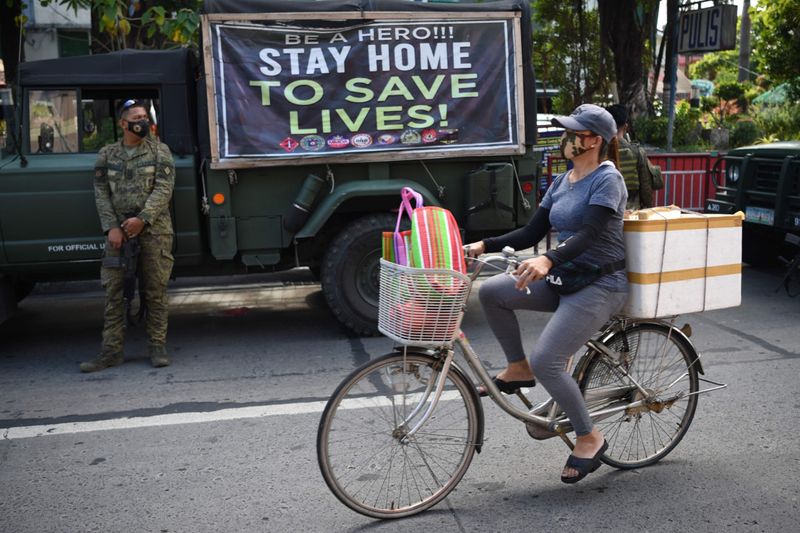
Under tighter regulations in force from mid-March to the end of May, public transport was barred, working from home instituted where possible, and only one person per household allowed out for essential goods.Image Credit: AP
5 of 15
Navotas, a city of 250,000 in the National Capital Region surrounding Manila, will from July 16 return to lockdown after cases tripled since June, its mayor said this week.Image Credit: AFP
6 of 15
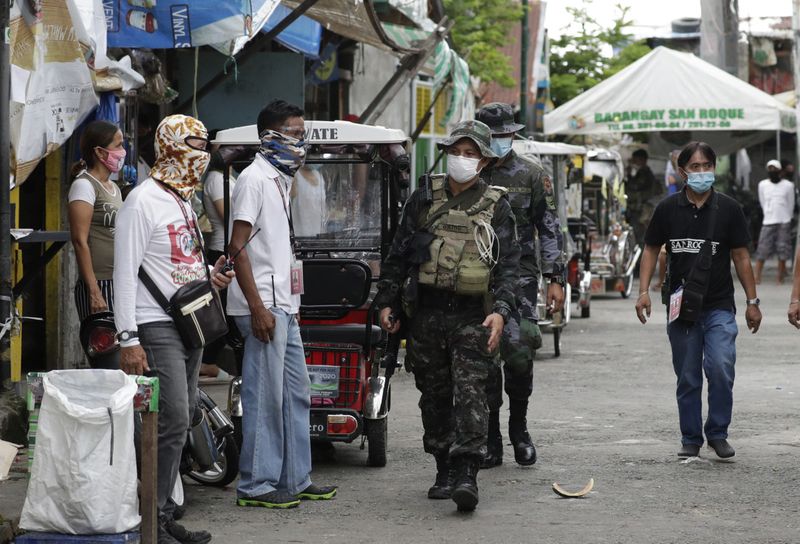
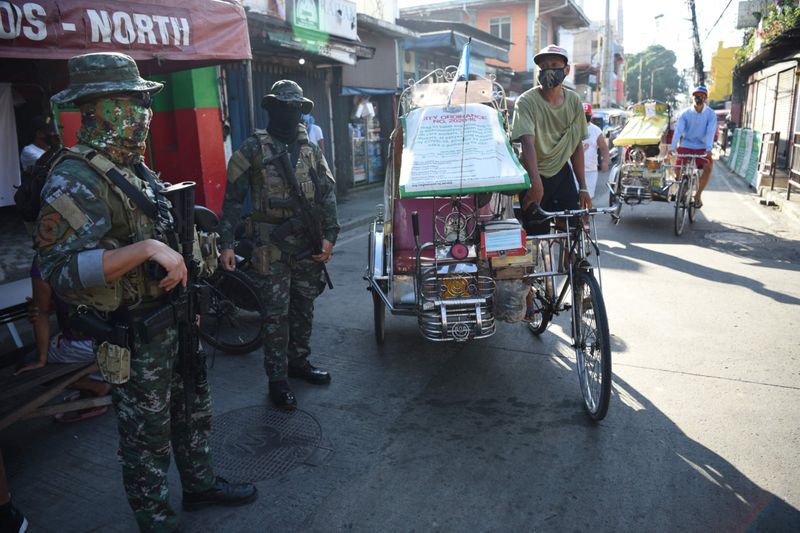
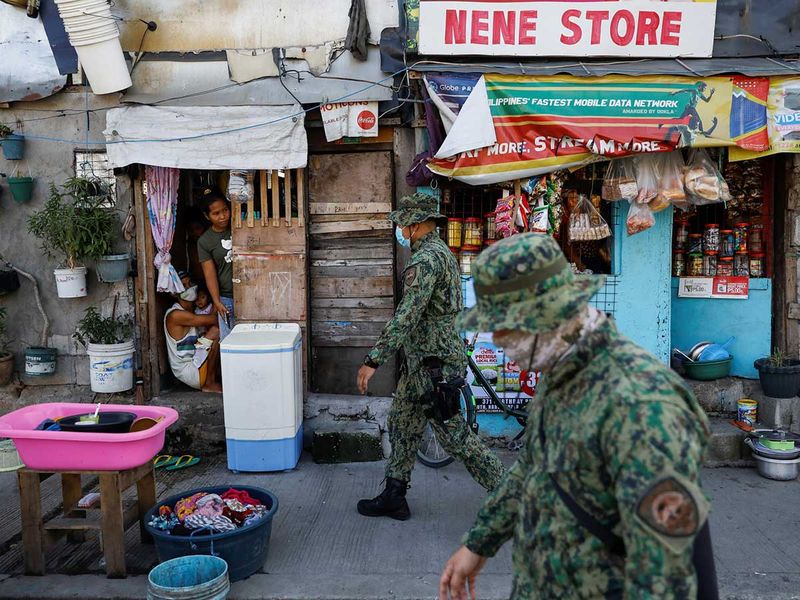
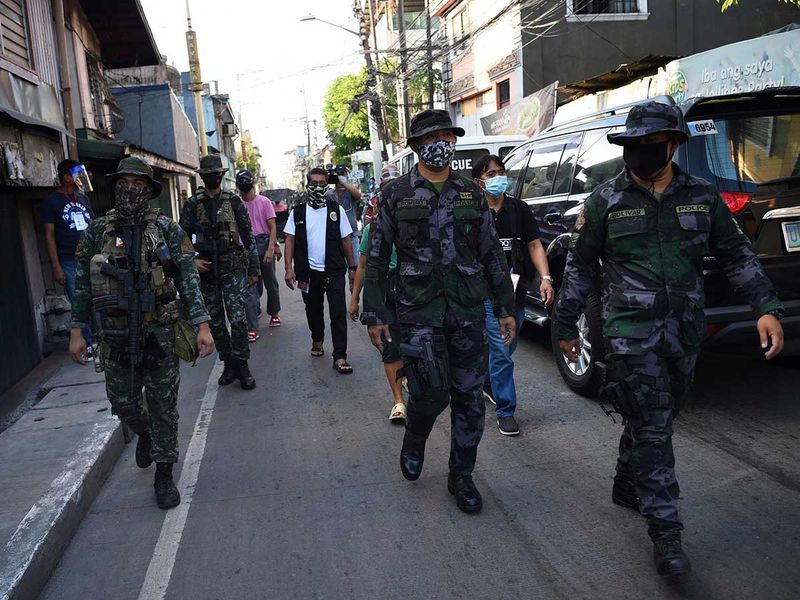
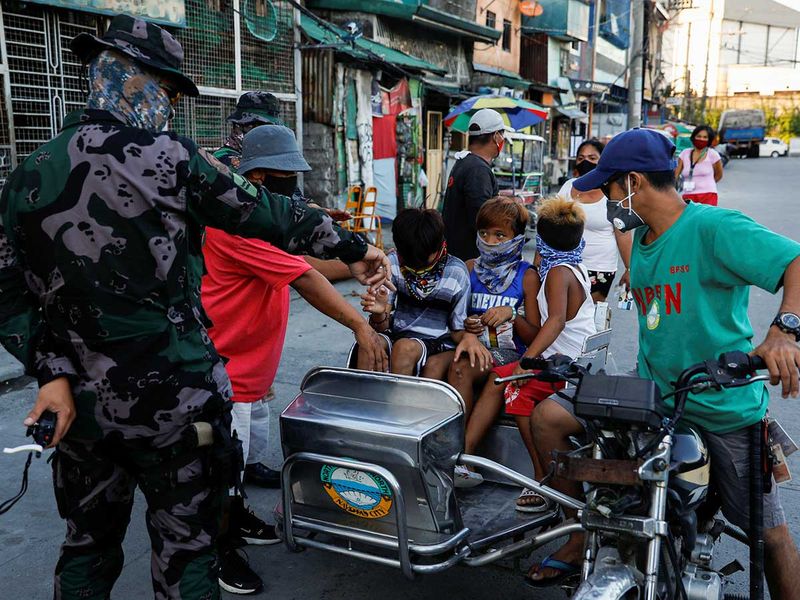
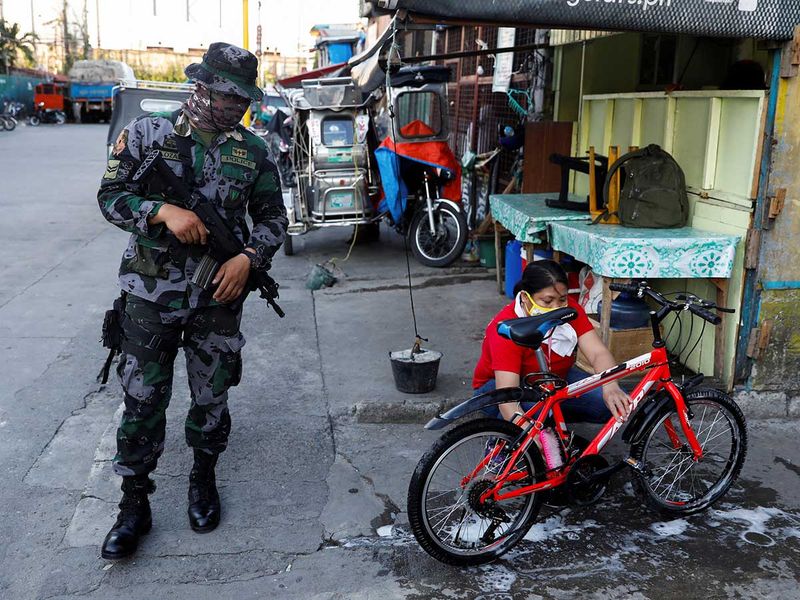
Policemen patrol around a village during the start of a lockdown due to a rise in COVID-19 cases in the city of Navotas.Image Credit: AP
7 of 15
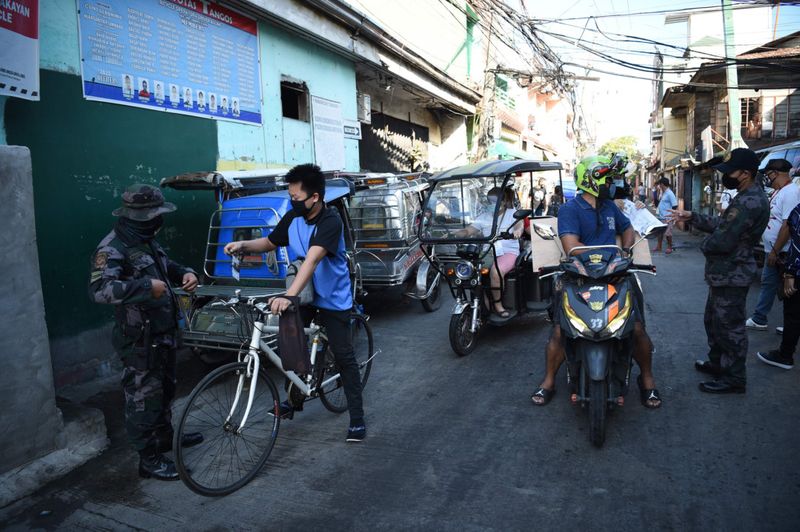
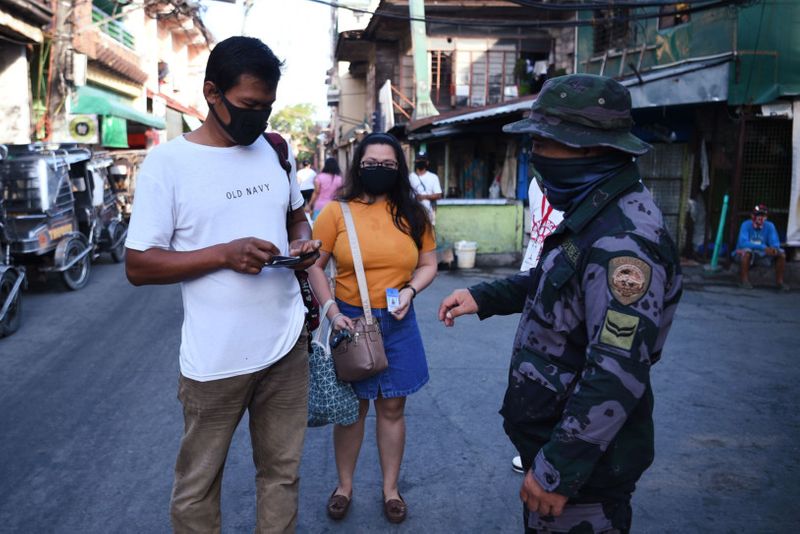
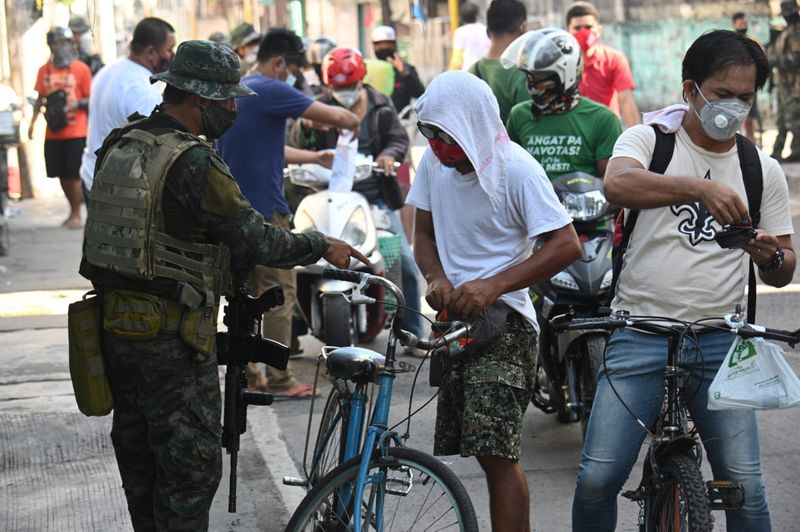
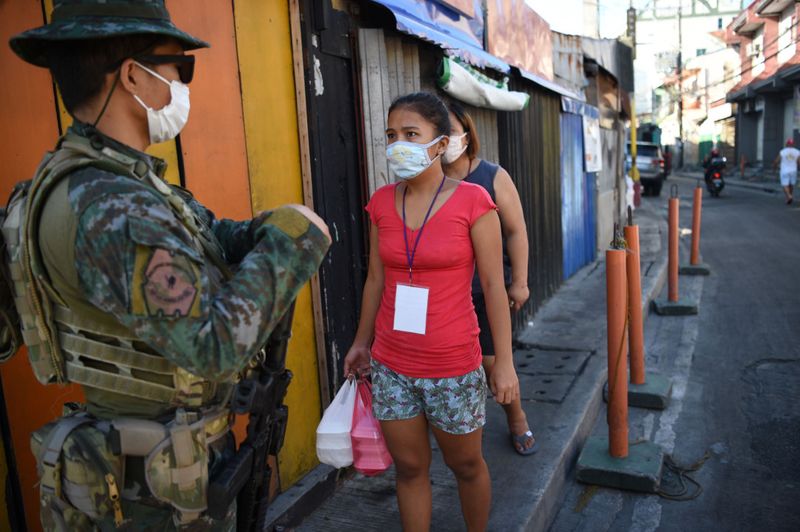
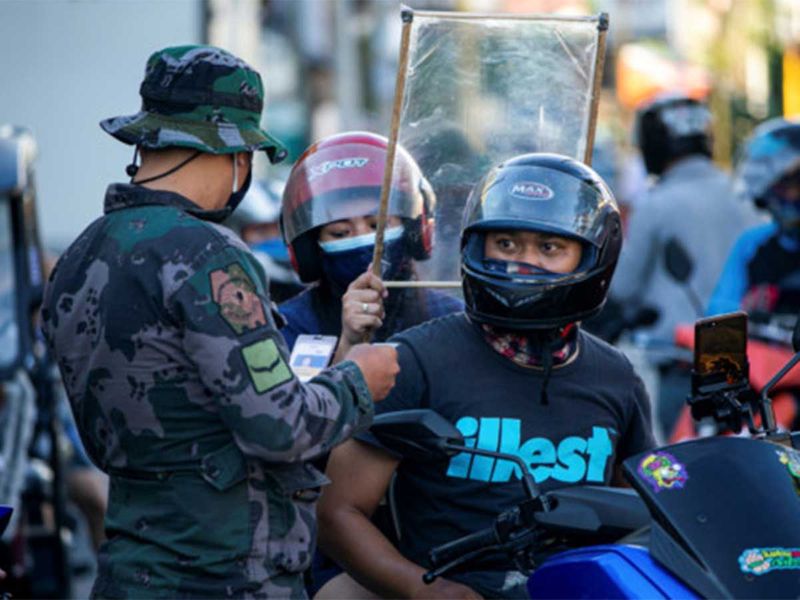
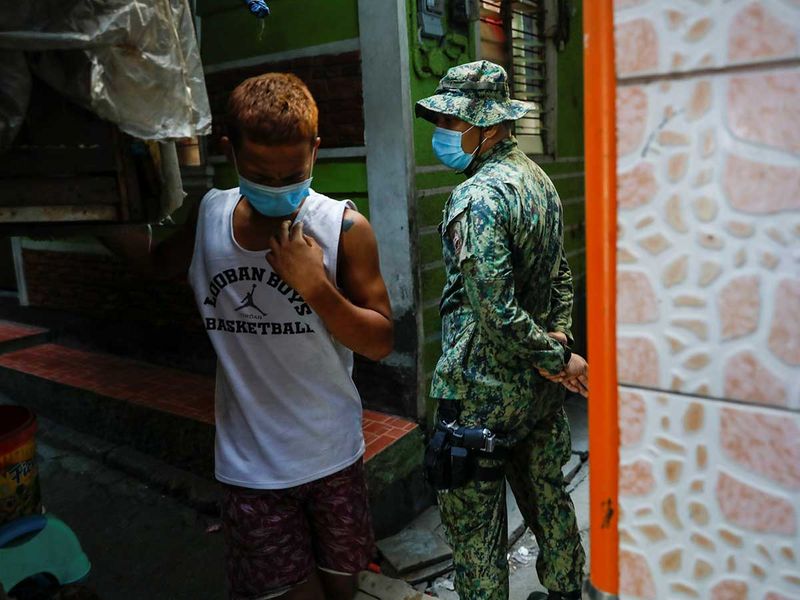
A member of the police manning a checkpoint asks to see the quarantine pass of a resident in suburban Manila.Image Credit: AFP
8 of 15
To prevent wider transmission, the government said it would use police to carry out house-to-house searches for patients so they can be isolated and brought to quarantine facilities where they can be properly managed.Image Credit: AP
9 of 15
Philippine police were being deployed to ensure people who test positive for the coronavirus and cannot self-isolate at home are taken to state-run quarantine centres, sparking warnings of potential rights violations.Image Credit: AFP
10 of 15
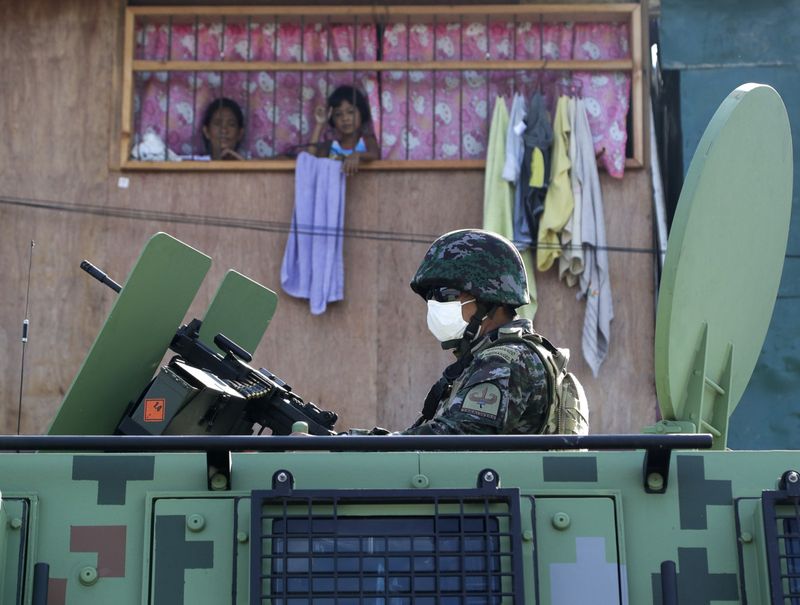
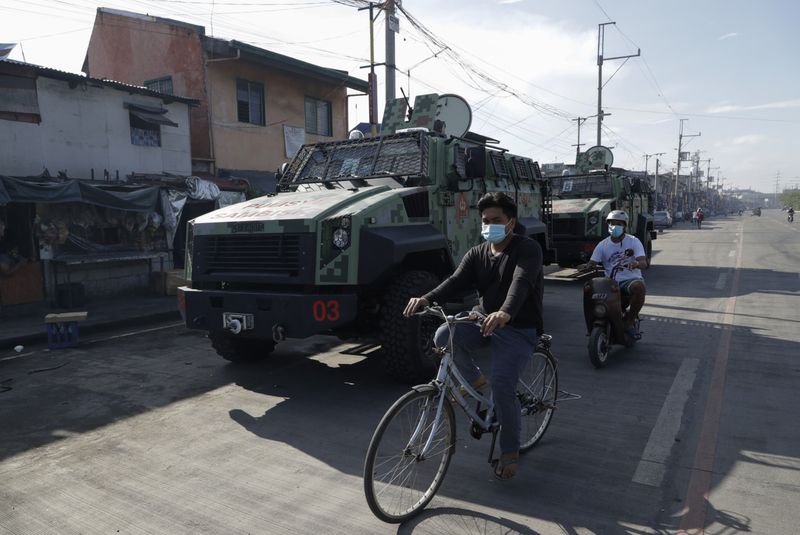
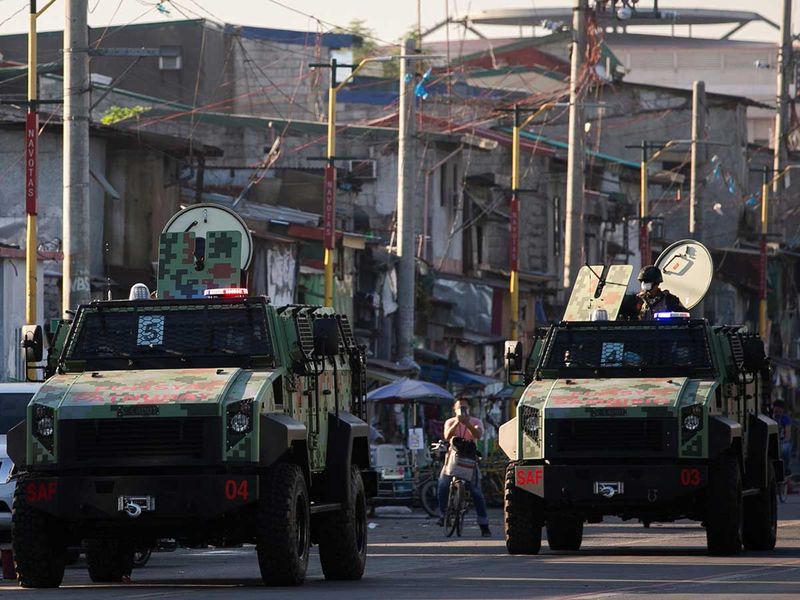
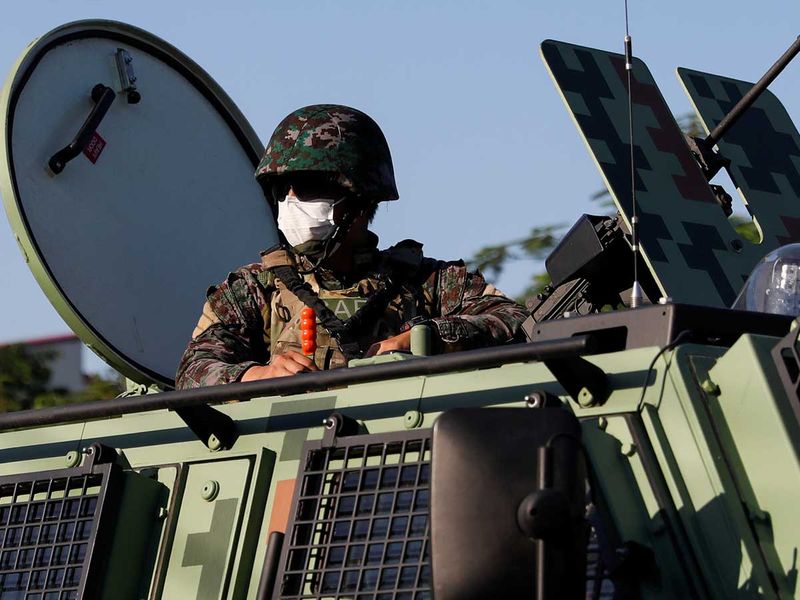
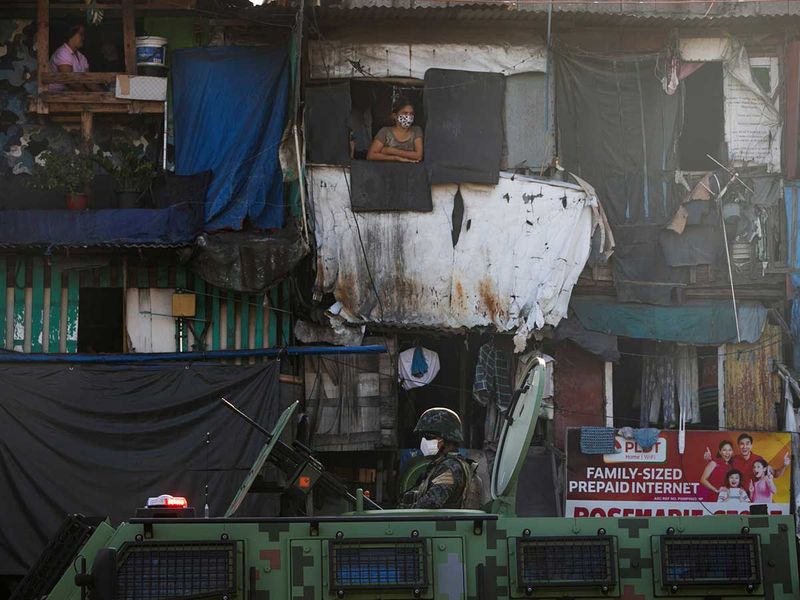
Residents watch as a police officer rides atop an Armored Personnel Carrier by their home during the start of a lockdown due to a rise in COVID cases in the city of Navotas, Manila.Image Credit: AP
11 of 15
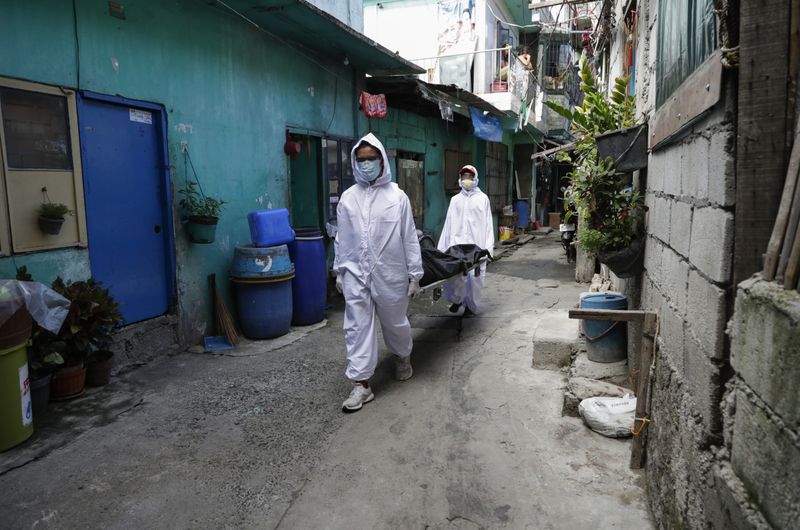
Funeral workers in protective suits carry a cadaver during the start of a lockdown due to a rise in COVID cases in the city of Navotas.Image Credit: AP
12 of 15
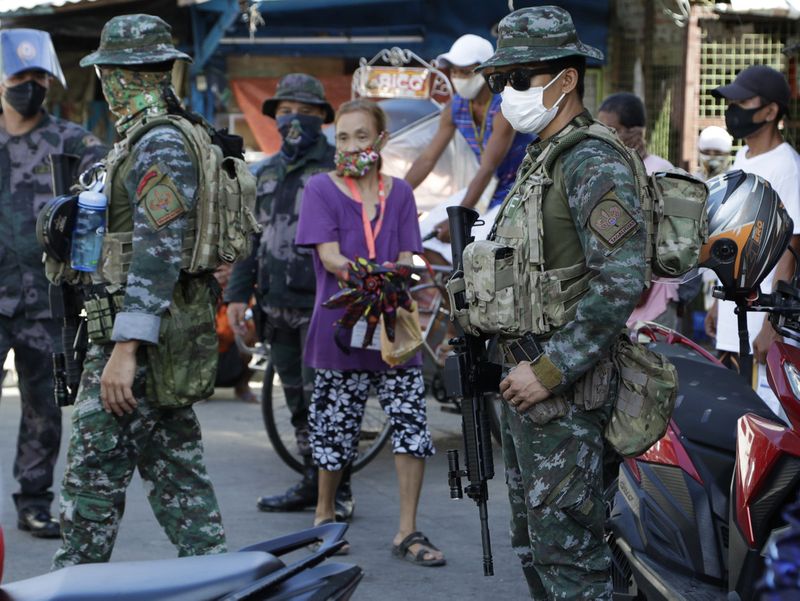
An armed member of the police special action force speaks to residents as he mans a checkpoint along a street in Navotas.Image Credit: AFP
13 of 15
Armed members of a police special action force man a checkpoint along a street in Navotas.Image Credit: AFP
14 of 15
Confirmed Coronavirus infections continues to rise in the country after it has reopened an economy that’s on the brink of recession while still struggling to combat the pandemic.Image Credit: AFP
15 of 15
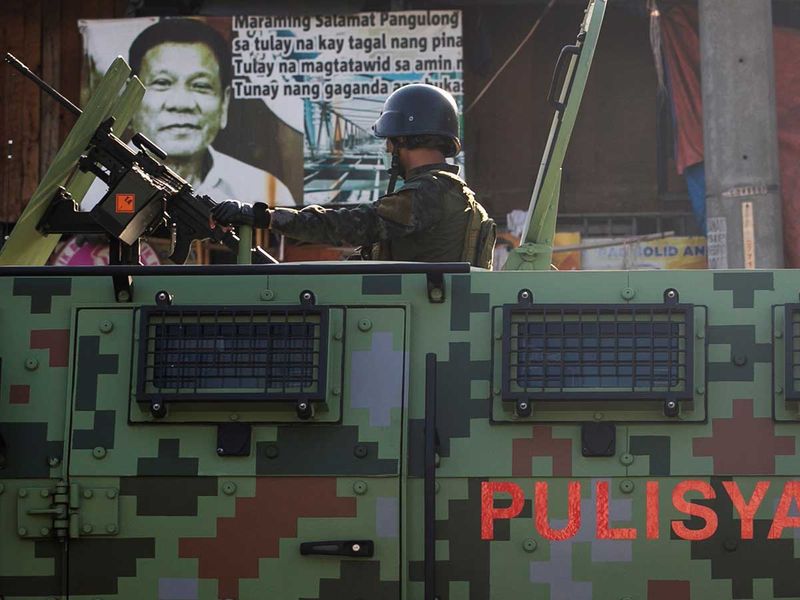
Residents ride past police Armored Personnel Carriers during the start of a lockdown due to a rise in COVID cases in the city of Navotas, metropolitan Manila, Philippines.Image Credit: AP Source: Gulf News Share...
Human rights groups say the campaign is from the playbook of the police-led anti-drug war
Source: Golf News
1 of 12
At the peak of the Philippines' war on drugs, people in the rundown neighbourhoods of Navotas in the capital Manila grew used to police knocking on doors, or bursting into the homes of drug suspects - who often wound up dead.Image Credit: Reuters
2 of 12
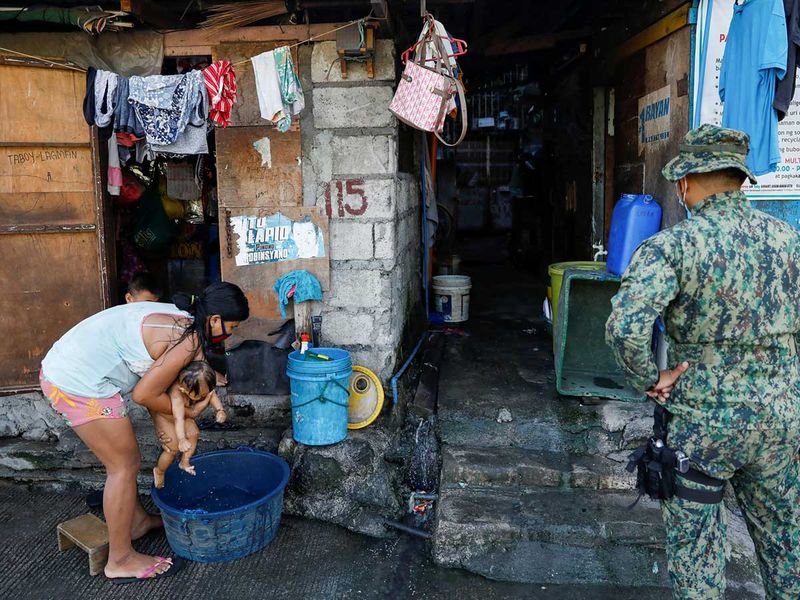
Now, many residents of the Navotas area, which has been particularly badly hit by the coronavirus, fear another harsh police campaign after the government said officials will visit homes of patients with mild or no symptoms and escort them to isolation centres. | A woman looks out of her window as local government reimposed a lockdown.Image Credit: Reuters
3 of 12
Some Filipinos have labelled the plan "Tokhang 2", calling it the sequel to a police-led anti-drug campaign that became synonymous with thousands of killings. "We are afraid of the house-to-house. We don't know what the police and soldiers will do to us," said Crisanto dela Cruz, a 46-year-old pedicab driver in Navotas. | Police officers on board armored vehicles patrol a neighborhood to enforce the reimposed lockdown.Image Credit: Reuters
4 of 12
"At the same time, we are afraid of getting infected because we are always outside." Infections have tripled in the Philippines since June 1 and the interior ministry announced this week that health officials, with the help of local authorities and the police, will move people suffering from COVID-19 from their homes to isolation centres. It has urged neighbours to report potential cases of infected people who are evading authorities. | Members of a police special action force walk with local officials as they patrol a street in Navotas.Image Credit: AFP
5 of 12
President Rodrigo Duterte's spokesman, Harry Roque, stressed the home visits will be led by local health workers. In a statement, he said "police presence is merely to provide support or assistance in the transport of patients". But Roque also said anyone likely to spread the virus could be forcibly removed "if need be".Image Credit: Reuters
6 of 12
"We can still compel them but I don't think it will be in the nature as if they are being treated as criminals", he told CNN Philippines. The United Nations has said at least 8,663 people, and possibly many more, were killed in the Philippines after Duterte launched a war on drugs in 2016. It said the killings took place amid "near impunity" for police and incitement to violence by top officials.Image Credit: Reuters
7 of 12
Most of the deaths were in poor, run-down areas like those in Navotas. Police say their actions in the anti-drug campaign have been lawful and that deaths occurred in shootouts with dealers resisting arrest. The coronavirus strategy was announced in a week when the Philippines recorded Southeast Asia's biggest daily jump in deaths from the disease.Image Credit: Reuters
8 of 12
While much of East Asia appears to have COVID-19 under control, the Philippines has recorded nearly 36% of its infections and 23% of its 1,660 deaths in the past two weeks. In the region, only Indonesia's death toll is climbing faster. The government has defended the house-to-house approach, saying that infected people with insufficient space to quarantine themselves at home should be moved to isolation centres. | Residents look out from their windows as a police officer on board an armored vehicle patrols their neighborhood.Image Credit: Reuters
9 of 12
But opposition senators and human rights groups say the campaign is from the playbook of the drug war. Senator Franklin Drilon said police had been enforcing a lockdown aggressively, and there was no need for "fascist actions to demand submission".Image Credit: Reuters
10 of 12
The National Union of People's Lawyers called it "another tool to sow fear in our communities". "With a government that has emboldened its own uniformed personnel to violate human rights with impunity, how can we be sure that the police will not abuse this new power," it said. A better approach, say critics, is to improve contact-tracing and testing, with just 0.9% of the population tested so far. Roughly two-thirds of the tests followed the relaxation of restrictions on June 1 to try to rescue the economy.Image Credit: Reuters
11 of 12
Navotas has since seen cases grow from 286 at end May to 906 as of July 16, prompting authorities to reimpose restrictions, with armed police in camouflage deployed to keep people indoors and threaten violators with fines. "It's not martial law, there's no need for police to go house-to-house," said Arvin Provito, a Navotas tricycle driver.Image Credit: Reuters
12 of 12 "What they should do is do house-to-house testing." Former health minister Esperanza Cabral said the government should rethink its approach. "As they say, give a carpenter a hammer and all he will see are nails," she said. "As for the people, they've been so used to being treated as nails they're naturally scared of anyone who has a hammer." | A police officer asks a man who was sleeping outside to go back home, as he patrols the neighborhood to enforce the reimposed lockdownImage Credit: Reuters Share...
She brought lots of patience, didn't let her guard down till she passed COVID-19 test
1 of 29
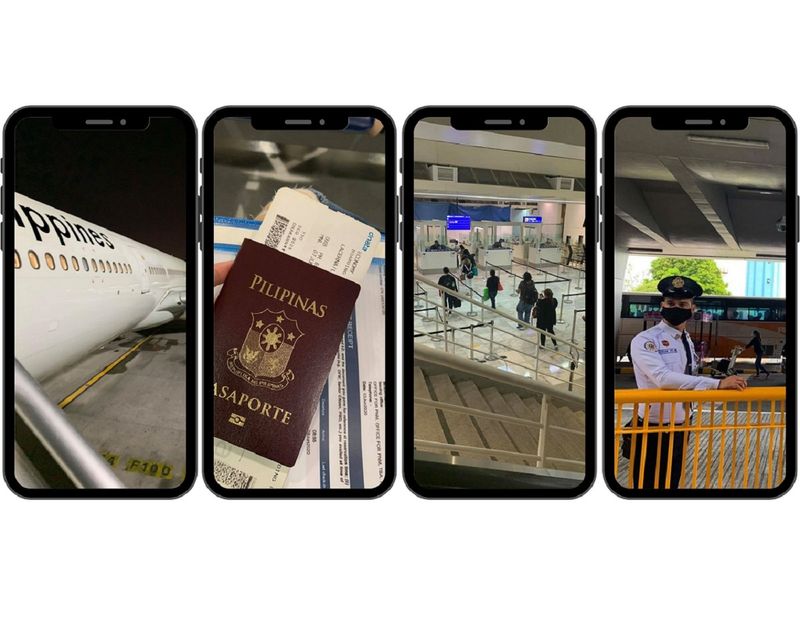
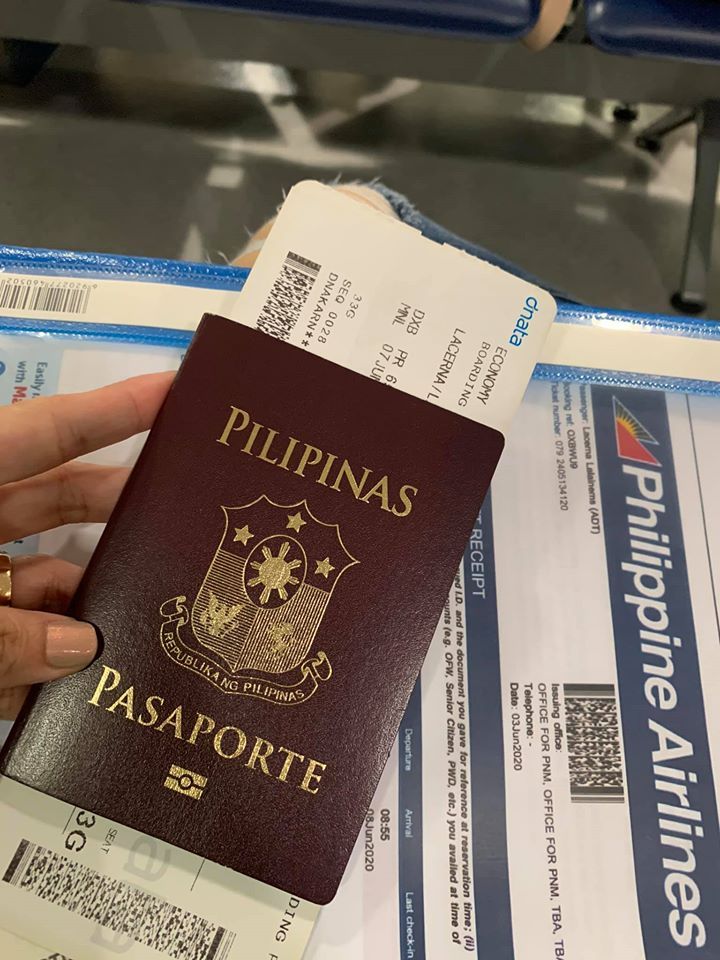
JOURNEY HOME: Dubai-based Filipina Lalaine Ortiz-Lacerna shares her "adventure" flying home to Manila during the COVID-19 pandemic. Her visual journey begins in Dubai, with bits about her three previous flight cancellations, her desperation to see her family again, and after landing, walking towards a swab test booth.Image Credit: Lalaine Ortiz-Lacerna / Facebook
2 of 29
READY TO FLY: "So here it is, finally, after three cancellations (three different airlines). After all the heartbreaks, numerous calls and long waiting lists of airlines, I decided to get a special flight to Manila on PAL (Philippine Airlines) because I was desperate to go home. I'm told these flights are not usually announced in the airline's website (based on my investigation). With the help of a friend working for a travel agency in Dubai, I was lucky to get an earlier date. Thanks to you. Lesson learnt: Try and try until you succeed," wrote Lalaine Ortiz Lacerna, who worked for seven years in Dubai as a nurse.Image Credit: Lalaine Ortiz-Lacerna / Facebook
3 of 29
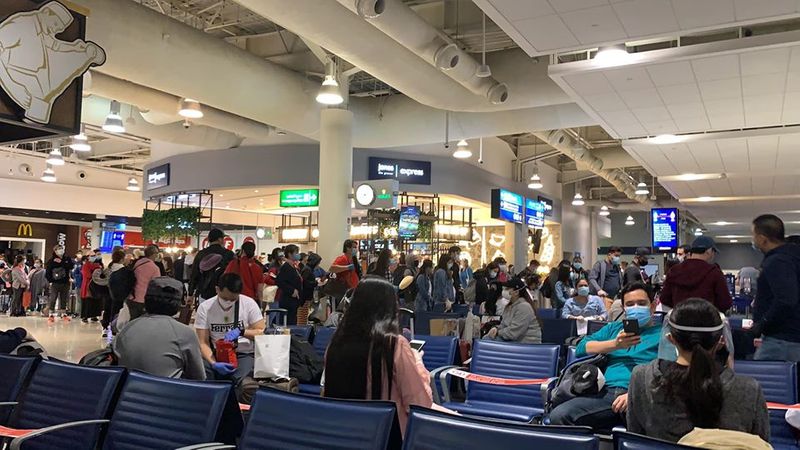
FLIGHT DELAYED FOR 3.5 HOURS: "I told myself, 'don't complain'. What's important is that the flight home is on. This was the time when I was full of positivity and energy. I brought lots of patience with me," says Lalaine Ortiz-Lacerna. She flew to Manila from Dubai on June 8, 2020 on a Philippine Airlines flight. She posted this June 13, 2020 after the completing mandatory quarantine and testing negative following arrival in Manila.Image Credit: Lalaine Ortiz-Lacerna / Facebook
4 of 29
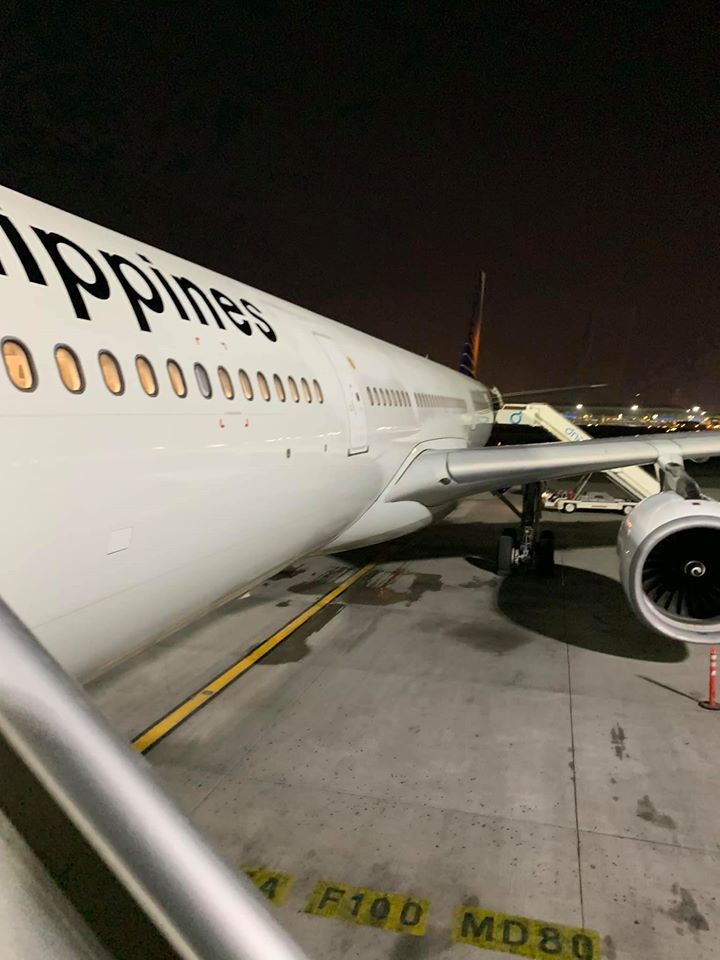
BOARDING TIME: Filipina Lalaine Ortiz-Lacerna flew to Manila on June 8, 2020 from Dubai on board a Philippine Airlines flight. She wrote: "And, at long last, this is my moment!" She posted this June 13, 2020 after the completing her quarantine and testing negative following arrival in Manila from Dubai. Image Credit: Lalaine Ortiz-Lacerna / Facebook
5 of 29
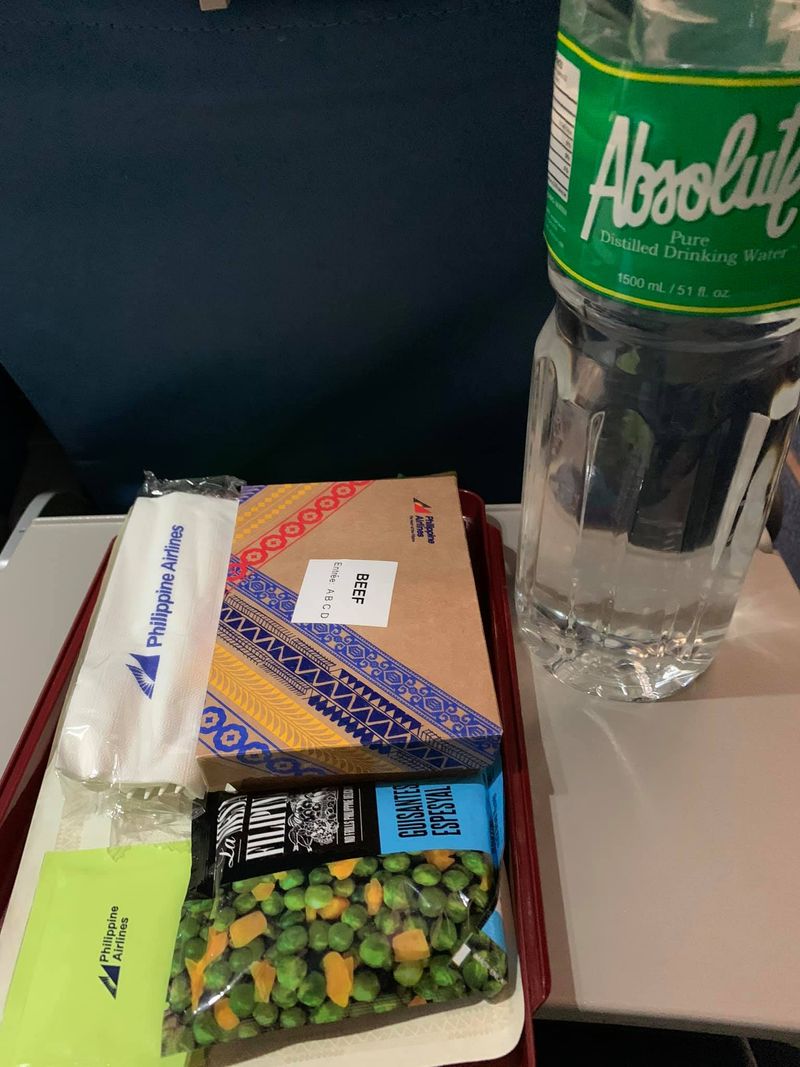
CABIN FOOD: "The cabin crew served food almost immediately. I skipped it. I was paranoid. I had to make sure I will not take off my mask during the whole flight. I didn't want to take any chances of getting the virus. Disclaimer: this is only my choice and I have nothing against the airline food."Image Credit: Lalaine Ortiz-Lacerna / Facebook
6 of 29
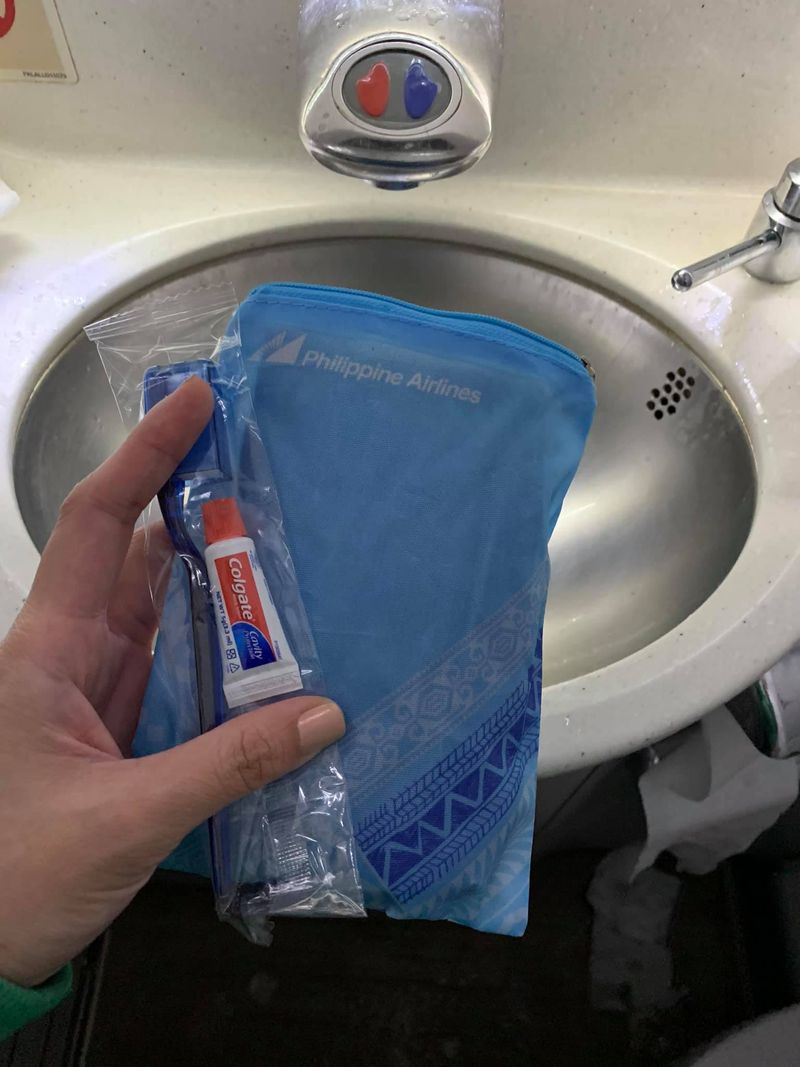
Hygiene kit, handed out by cabin crew.Image Credit: Lalaine Ortiz-Lacerna / Facebook
7 of 29
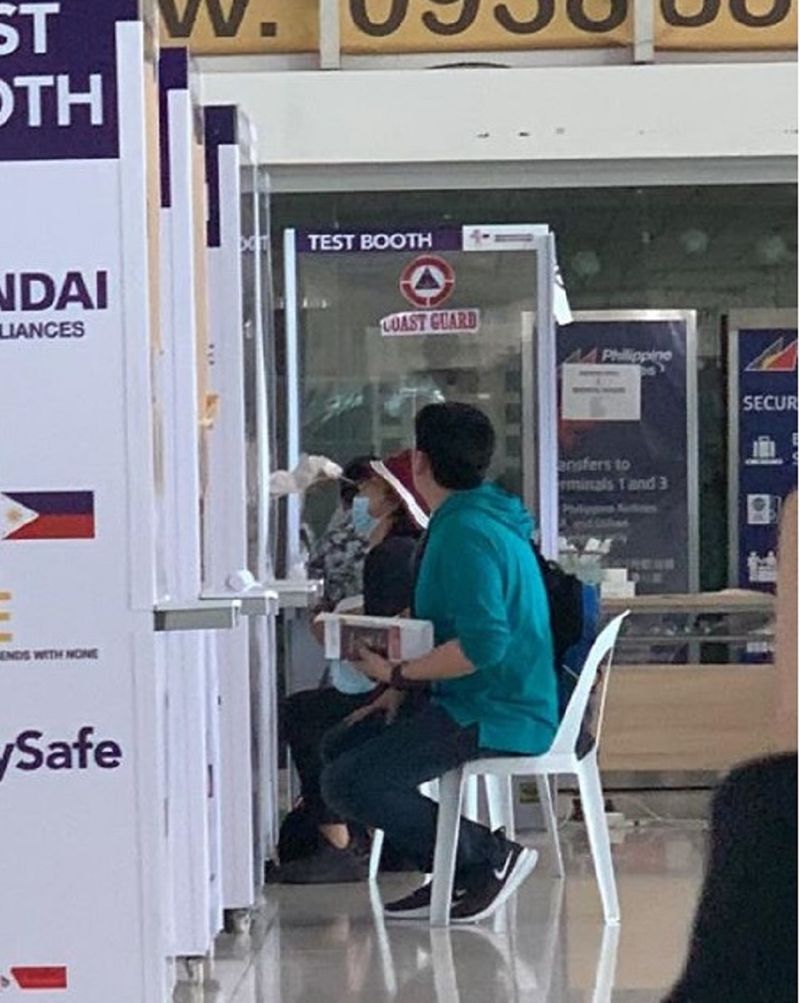
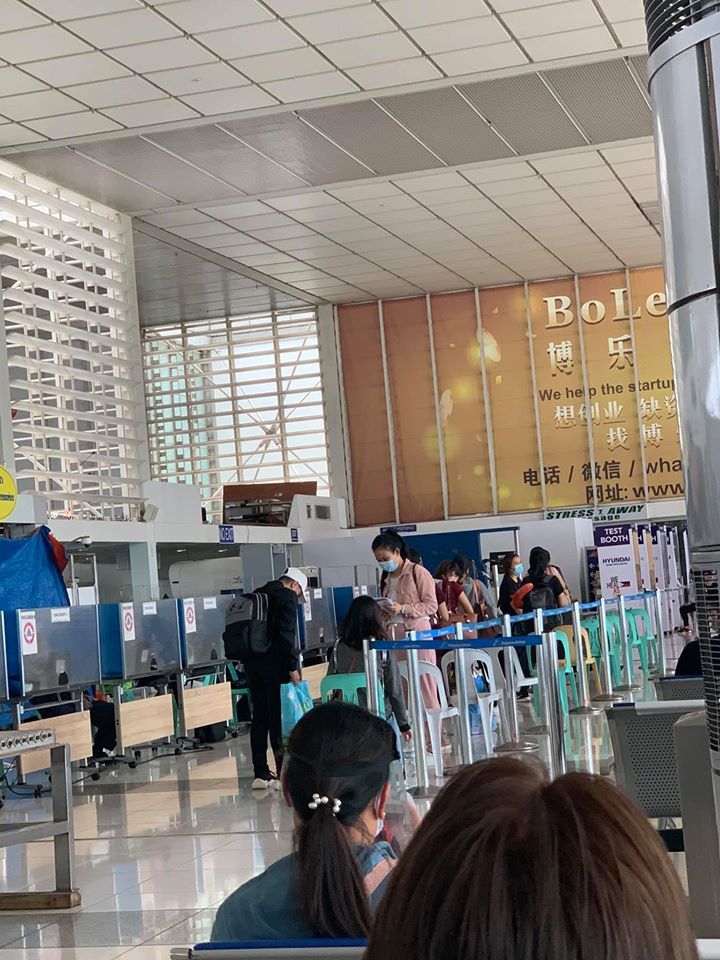
PCR TEST: The queue to testing booth at the airport. PCR tests were conducted on all passengers following landing in Manila's Ninoy Aquino International Airport. Image Credit: Lalaine Ortiz-Lacerna / Facebook
8 of 29
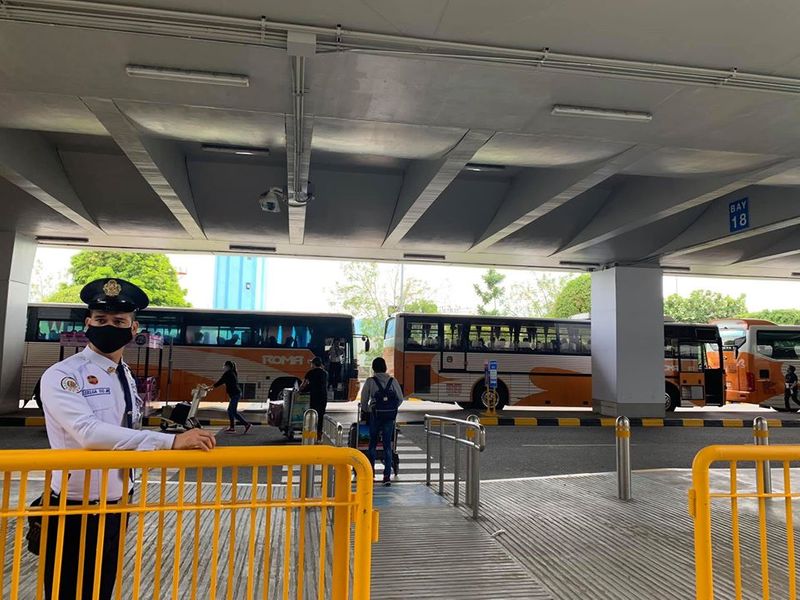
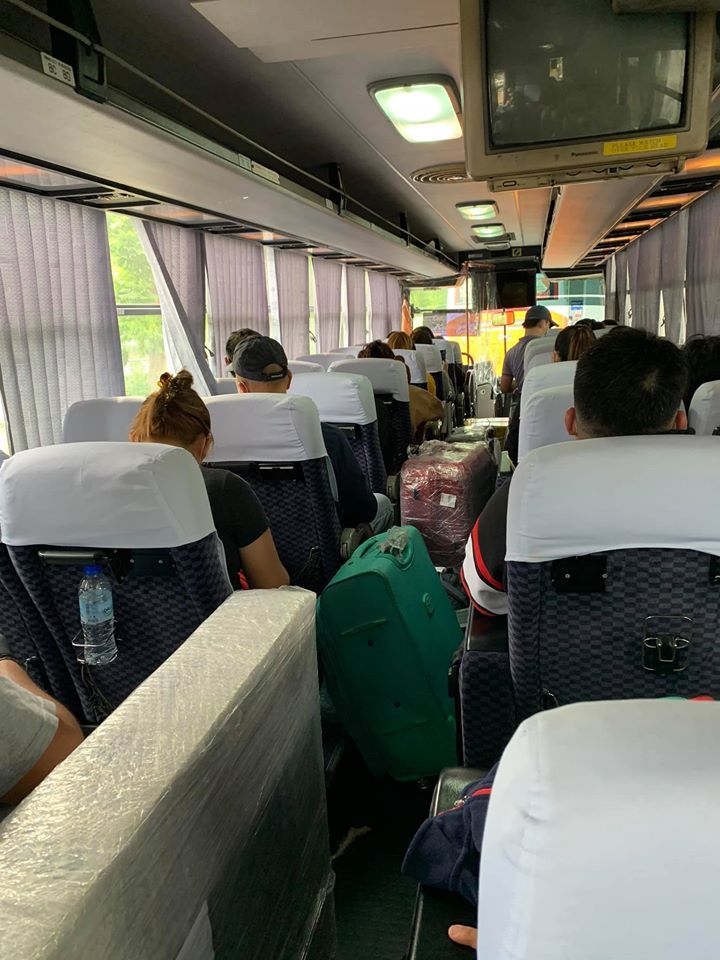
3 HOURS AFTER LANDING: Members of the quarantine team started moving us to different hotels in these orange buses. The hotel quarantine is on while waiting for test results. Till this time, we had no idea in which hotel we'd wind up staying. It gave the bus journey an element surprise! For non-registered overseas Filipino workers (OFWs), or those on tourist visa, there will a designated desk to assist you, and will help bring you to the hotel of your choice. They will show you a list of hotels, with room rates. Unfortunately, this will be at your own expense.Image Credit: Lalaine Ortiz-Lacerna / Facebook
9 of 29
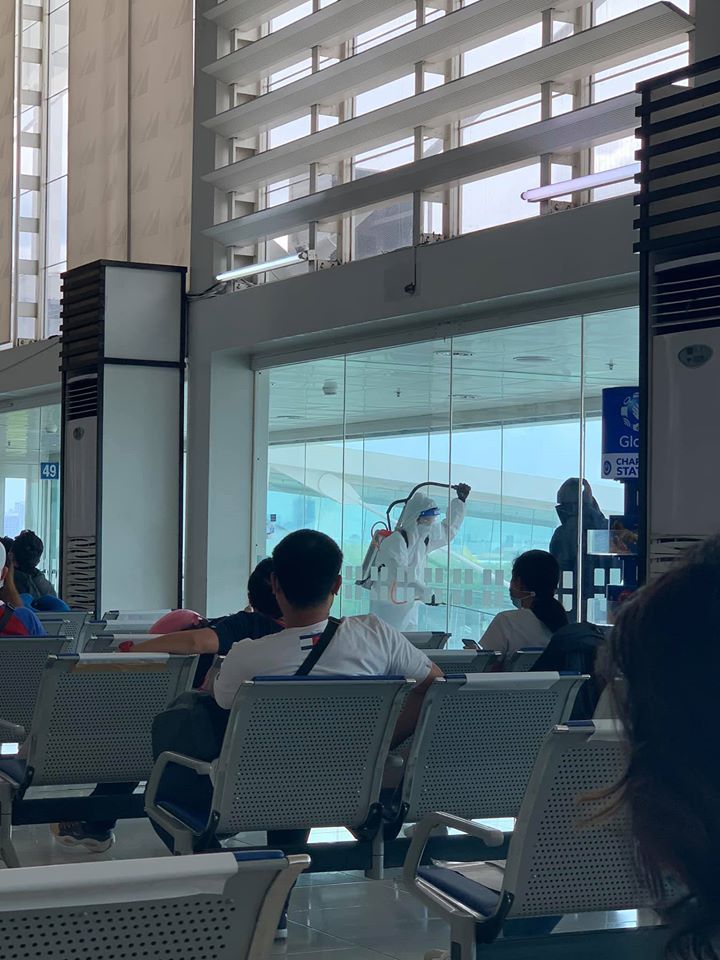
Airport staff disinfecting the hallways, chairs, etc. This sight is reassuring.Image Credit: Lalaine Ortiz Lacerna
10 of 29
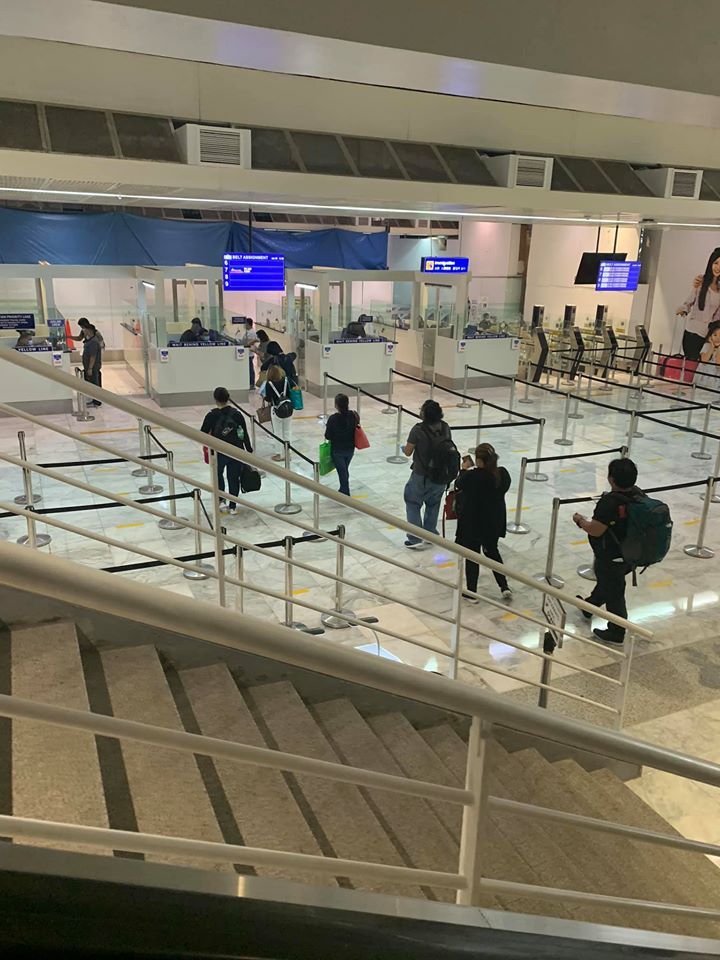
BORDER CHECKS: No crowd or long queues to the immigration counters at Manila's Ninoy Aquino International Airport Temrinal 2.Image Credit: Lalaine Ortiz-Lacerna
11 of 29
PRIORITY LANE: All pregnant women, families and children are given priority. FYI : Since I am an OFW, the COVID-19 swab test is free. For tourists on those on student visa, you need to pay for the swab test. If I am not mistaken, it's 3,500 pesos (sorry, I'm not sure). Image Credit: Lalain Ortiz Lacerna
12 of 29
Inside the bus that took us from airport to hotel.Image Credit: Lalaine Ortiz-Lacerna
13 of 29
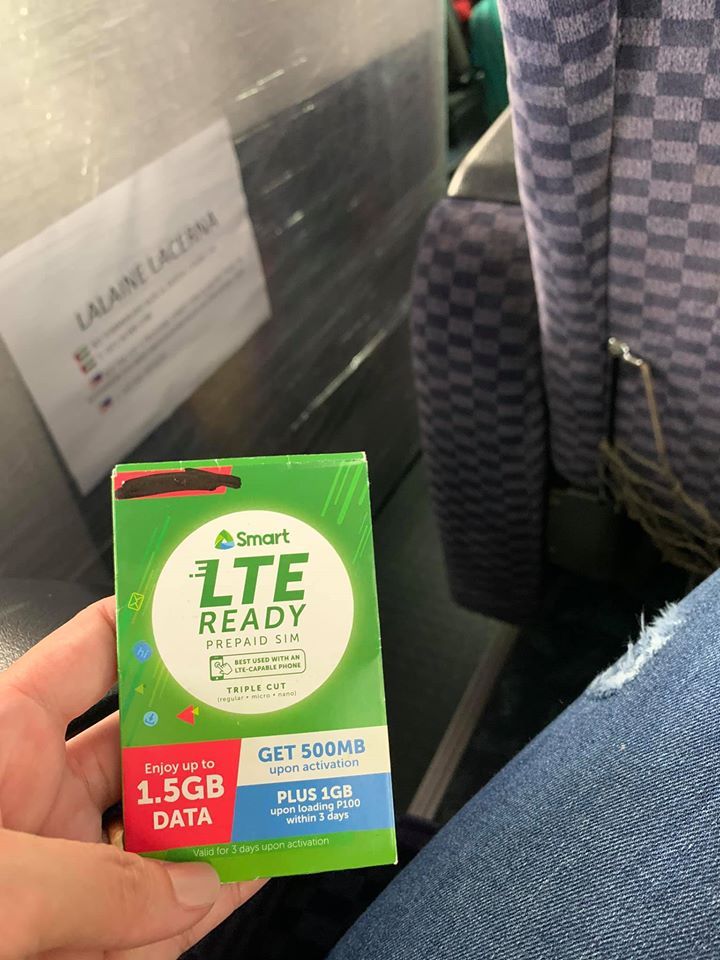
LOCAL SIM CARD: This mobile phone SIM card costs 100 pesos ($2), from either Globe and Smart, available with "Kuya" driver. Make sure you change your money at the airport money changer itself. Once inside the hotel, you're no longer allowed to get out of the room, till further notice.Image Credit: Lalaine Ortiz-Lacerna / Facebook
14 of 29
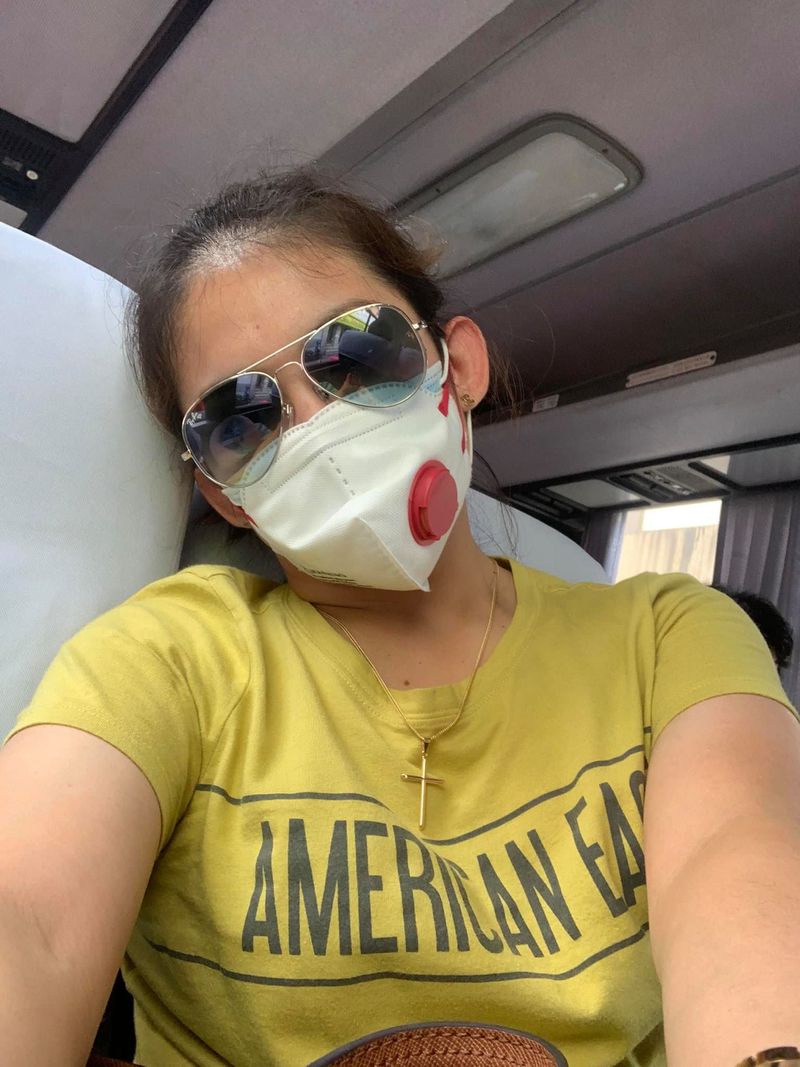
I FELT SO BEAT: "We didn't know where the bus driver would eventually bring us. But this time, I really exhausted, sleeping, hungry to the highest level. I brought with me lots of patience." "Image Credit: Lalaine Ortiz-Lacerna / Facebook
15 of 29
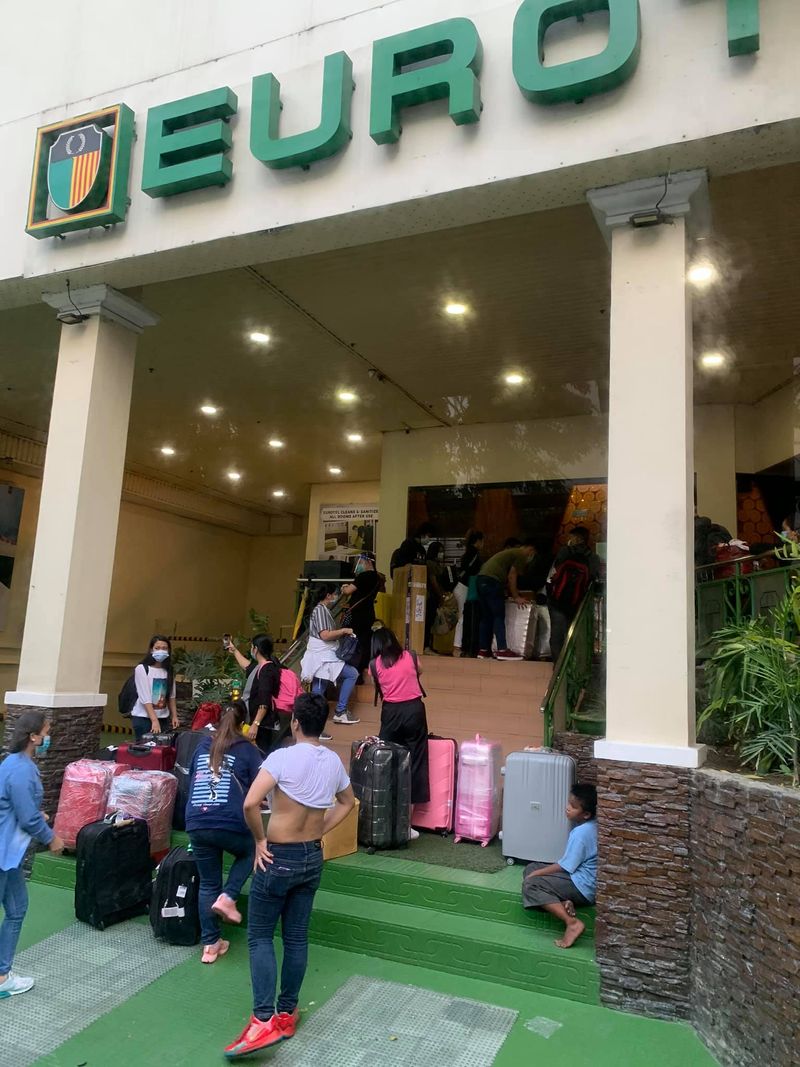
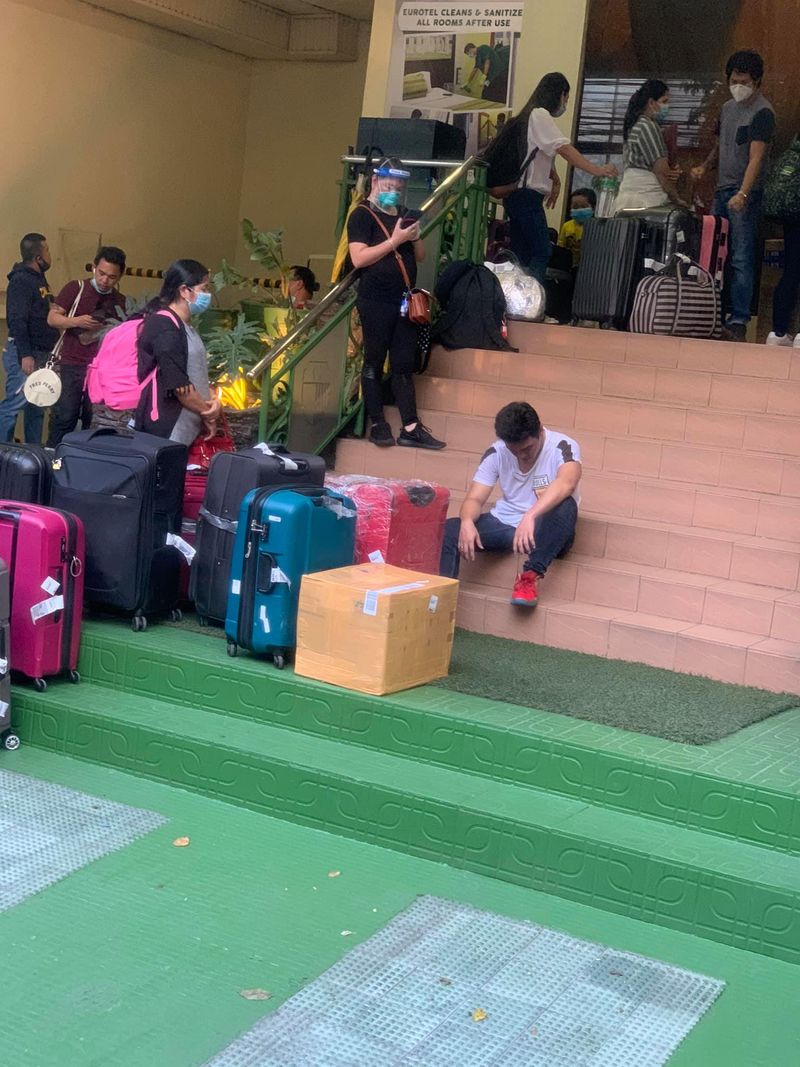
Here we are finally. We spent time catching up on the latest news while waiting for the severely understaffed hotel to complete check-in procedures. We were told there were just two hotel staff vs 300 check ins. Lesson learnt: don't complain because during this pandemic, staff shortage is everywhere. Can't wait to lie on a flat bed.Image Credit: Lalaine Ortiz-Lacerna / Facebook
16 of 29
QUEUE: A serpentine queue to check-in counter from the main hotel facade to the check-in counter. Image Credit: Lalaine Ortiz-Lacerna / Facebook
17 of 29
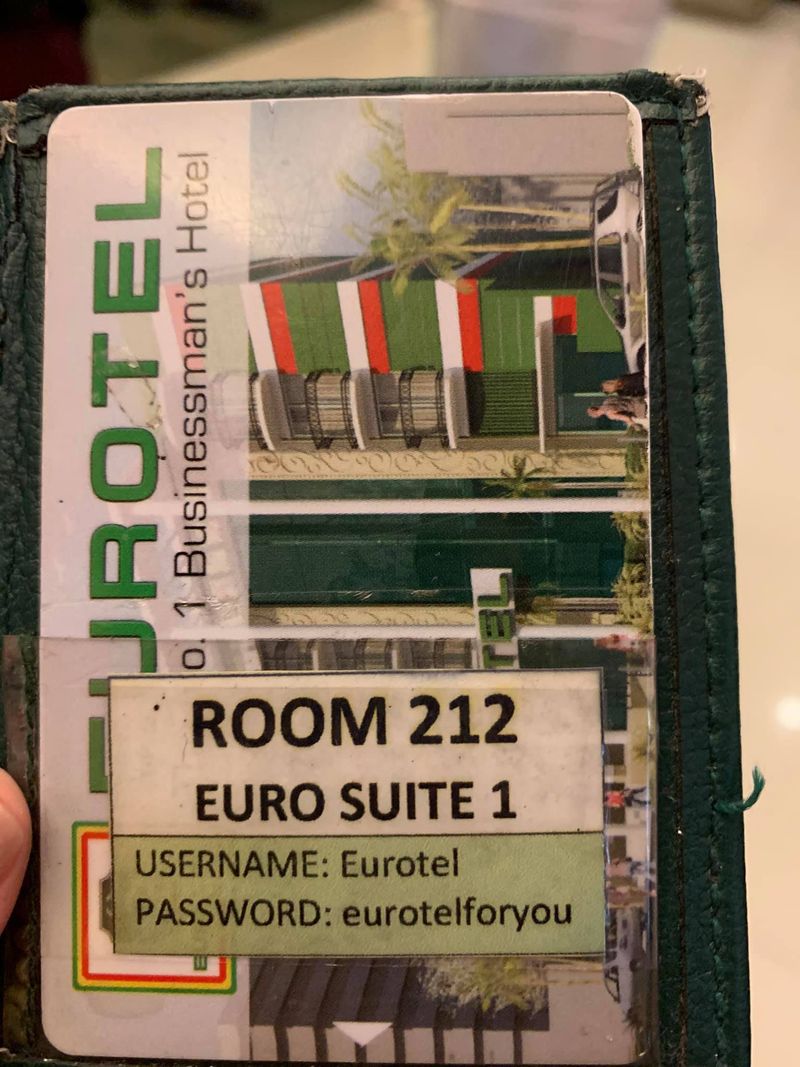
All of the waiting is worth it. Lets get inside this "Suite 1" room. Note: I didn't pay anything. After the check-in formalities, hotel staff assisted us to our assigned rooms.Image Credit: Lalaine Ortiz-Lacerna / Facebook
18 of 29
SPACIOUS, CLEAN: Inside my hotel suite.Image Credit: Lalaine Ortiz Lacerna / Facebook
19 of 29
Image Credit: Lalaine Ortiz Lacerna
20 of 29
Image Credit: Lalaine Ortiz Lacerna
21 of 29
Image Credit: Lalaine Ortiz Lacerna
22 of 29
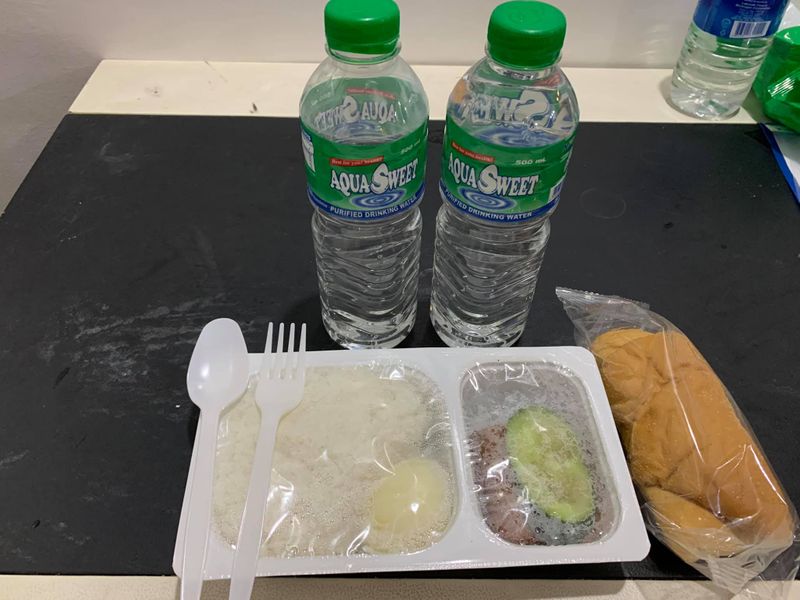
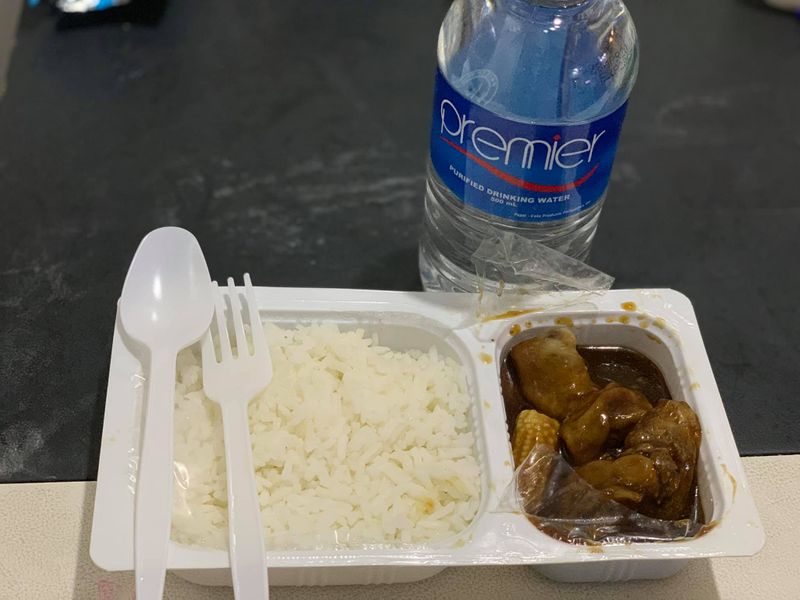
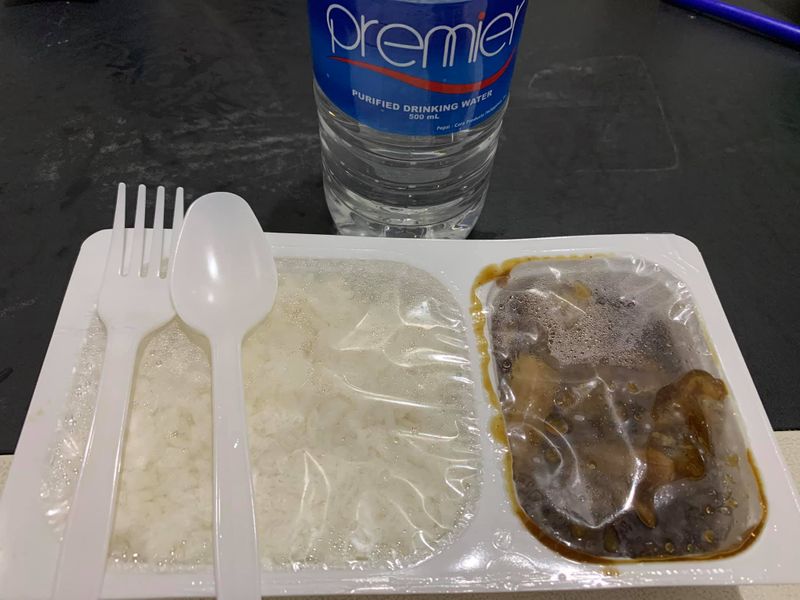
Free food dropped outside the door.Image Credit: Lalaine Ortiz Lacerna
Dinner is ready.Image Credit: Lalaine Ortiz Lacerna
25 of 29
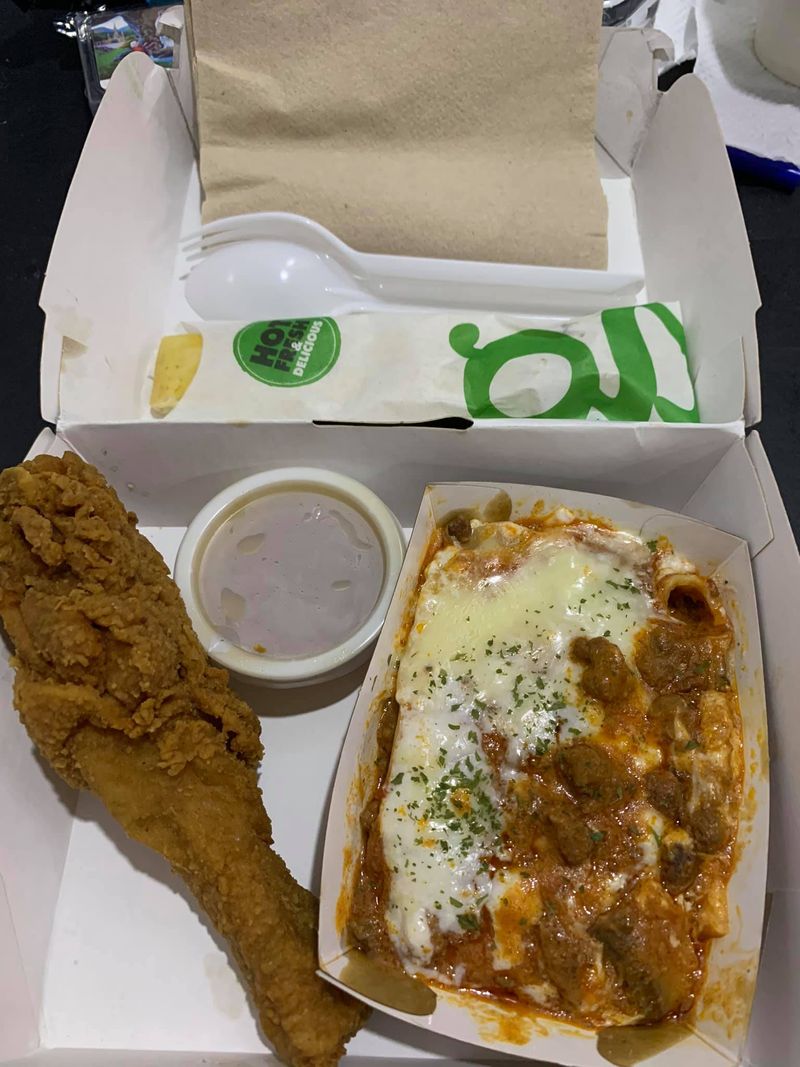
I missed local fastfood. Thankfully, there's a delivery option. Image Credit: Lalaine Ortiz Lacerna
26 of 29
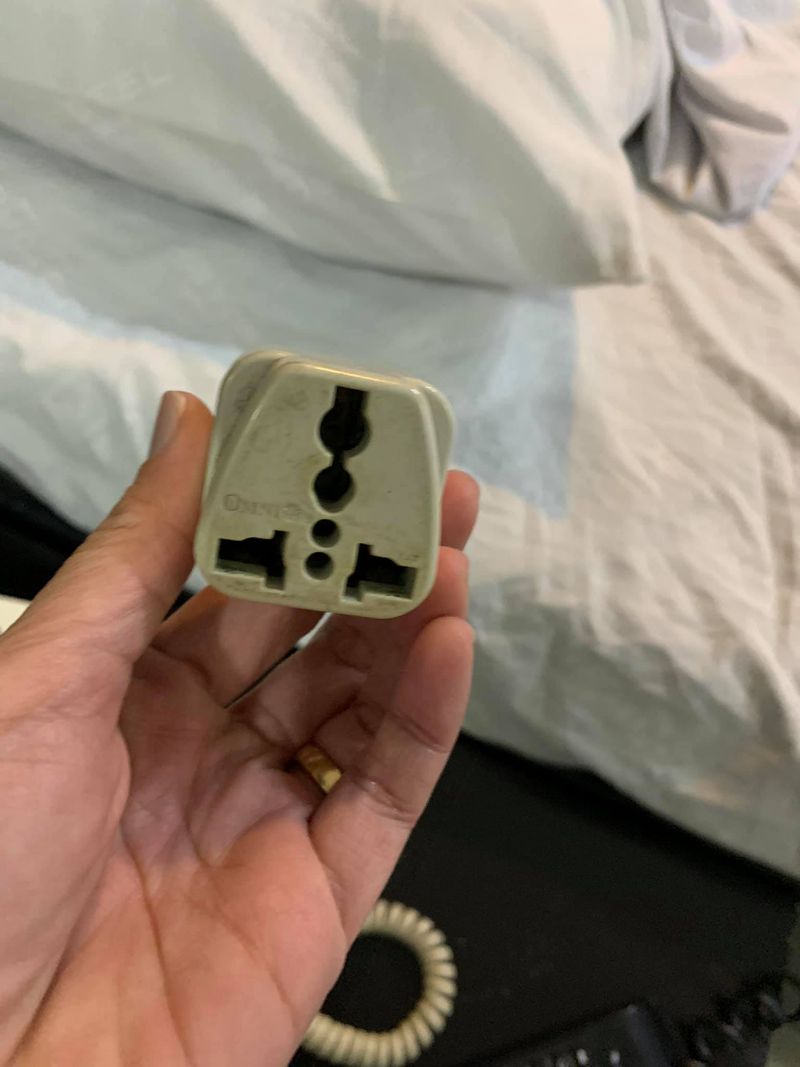
IMPORTANT GEAR: All my gadgets and powerbank ran out of juice. Remember to bring this adaptor with you when you fly home, as only the two-pin outlets are available in most places in the Philippines. The hotel may run out of such adaptors.Image Credit: Lalaine Ortiz Lacerna
27 of 29
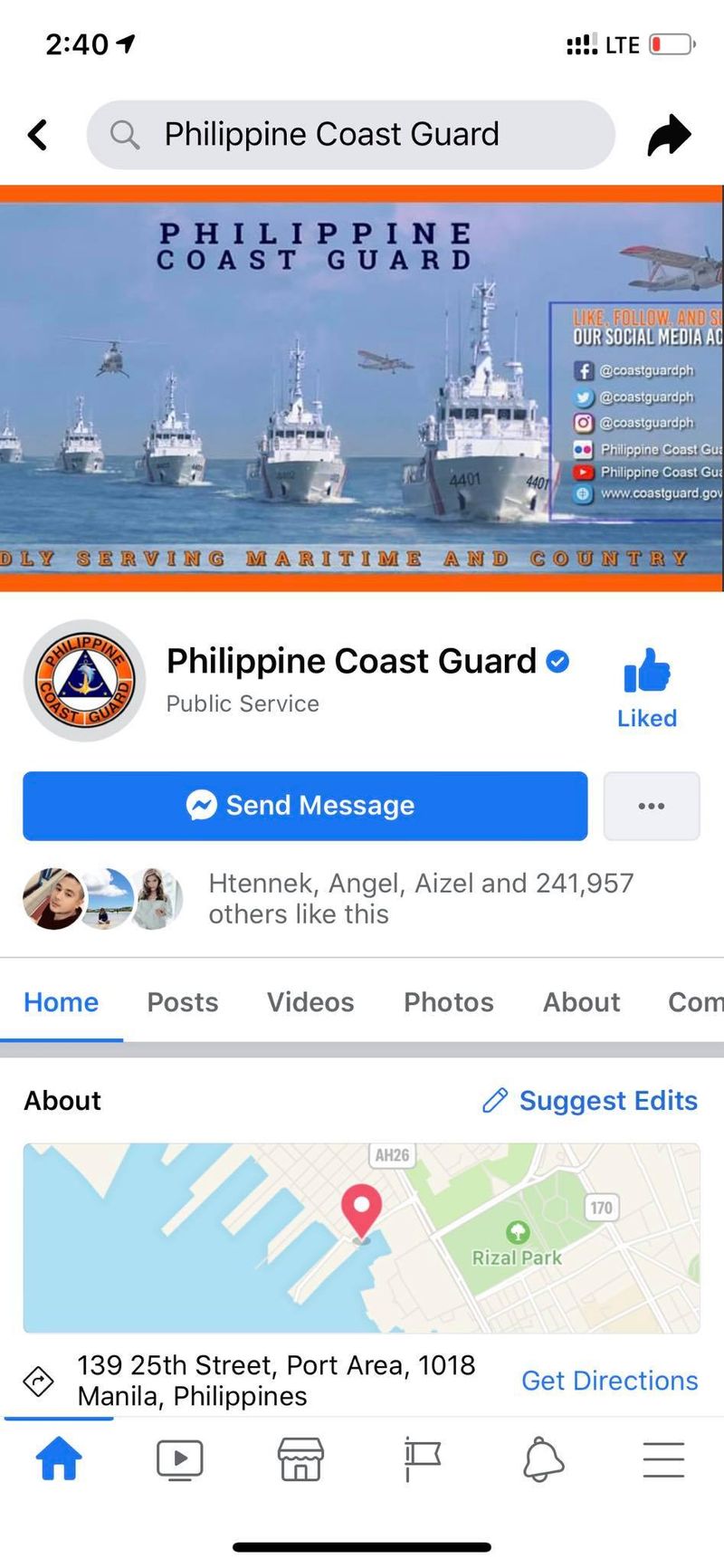
During the briefing, we were asked to follow this page. It's where the Coast Guard post COVID-19 test results everyday.Image Credit: Lalaine Ortiz Lacerna
28 of 29
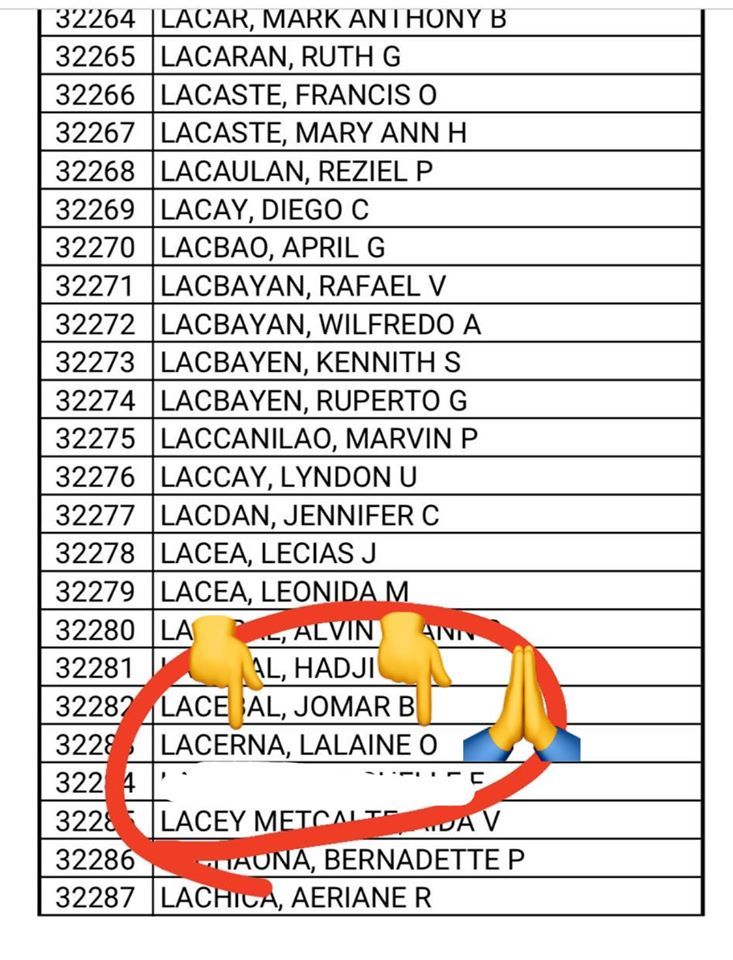
NEGATIVE LIST: After 4 days, this list came out. The rumours were right: results were out fairly quickly. When I got test result, it felt like passing the board exam, when I saw my name on this list. Thankful and blessed. Everything that just happened taught me many lessons. (1.) Don't complain - God is preparing things and they will happen at the right time. (2) Trust His will - If you believe that God is with you on your journey, don’t ask and never question. For sure He has plans. Indeed better plans: (3) Be patient - everything happens for a reason. (4) The reason why my previous flight schedules were cancelled was because He didn’t want me to endure what others experienced. (5) Be thankful and share your blessing! That's why I’m sharing this post to create positivity, towards the effort of our government to bring home all the Filipinos from around the world. I know it’s not easy. But I can tell our government is doing their best to help us. Thank you 🇵🇭❤️. Your returning OFW🇵🇭🙏🏻Image Credit: Lalaine Ortiz-Lacerna
29 of 29
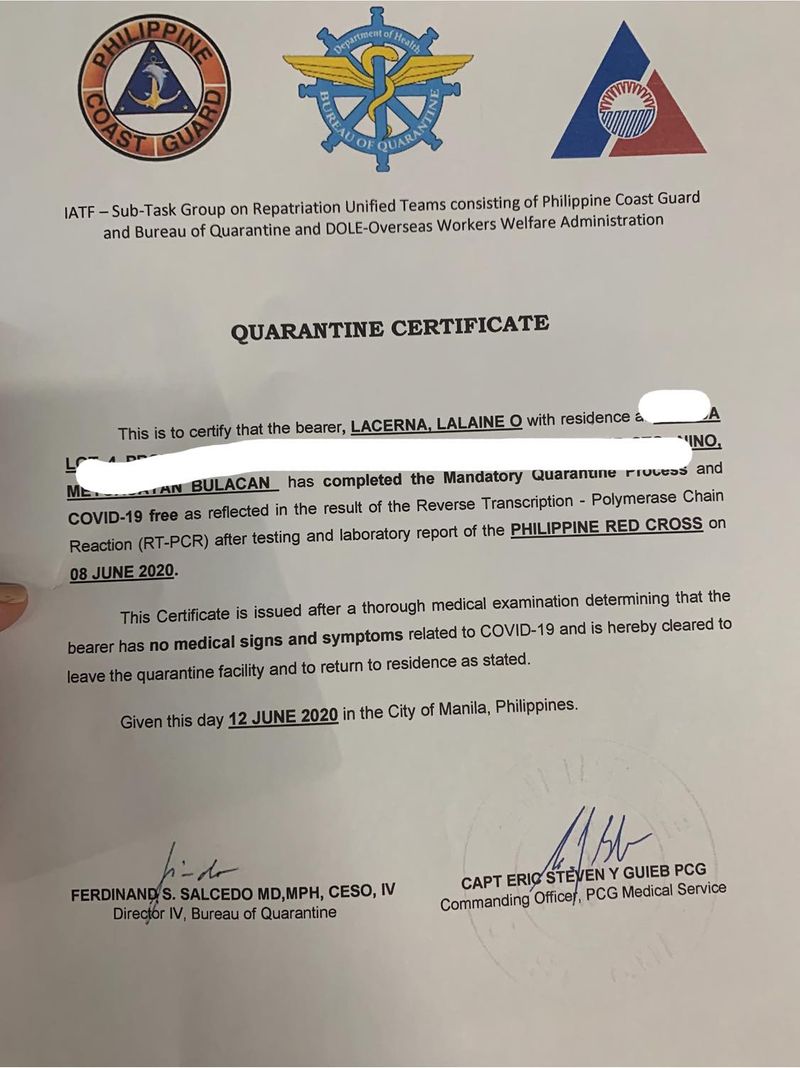
QUARANTINE CERTIFICATE: This certificate was given to us sa PITX (Paranaque Integrated Terminal Exchange bus terminal). From the hotel OWWA provided a free bus transport to all repatriates who tested negative. For those who have family within the National Capital Regiojn (NCR), you may ask them to fetch you. Mabrook! Finally, you're free.Image Credit: Lalaine Ortiz Lacerna Source: Golf News Share...